Auto Acoustics

Car Stereo and Window Tint

(919) 493-5473 Celebrating 35 Years!
  • Home
  • Services
    • ATV/UTV Upgrades
    • Car Audio
    • Driver Safety
    • Jeep Accessories
    • Marine Audio and Lighting
    • Motorcycle Audio
    • Remote Starters
    • Truck Accessories
    • Window Tint
  • About Us
  • Location
  • Customer Reviews
  • Contact Us
  • Work For Us
  • Facebook
  • Instagram

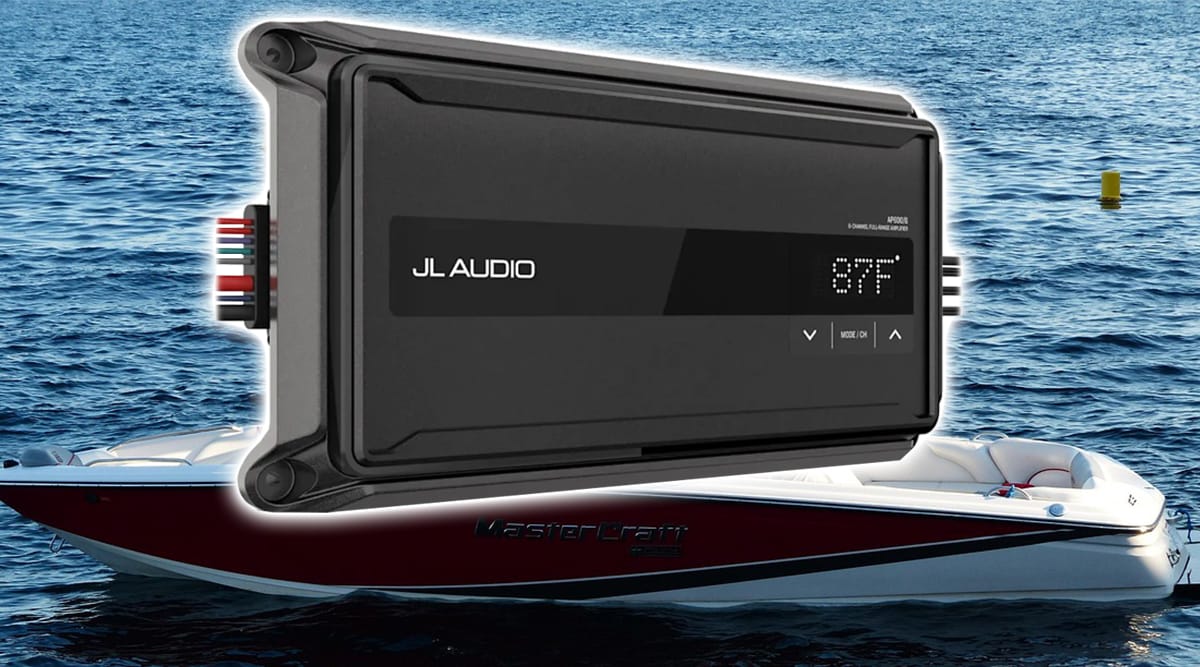
Product Spotlight: JL Audio AP600/6

JL Audio AP6006

A few decades ago, amplifiers designed for marine applications were not only huge but also inefficient and, crucially, not truly waterproof. Things have come a long way since then, and JL Audio has recently introduced a new series of products specifically for high-performance marine and powersport applications. In this spotlight, we’ll look at the new JL Audio AP600/6 amplifier.

Introducing JL Audio AP Amplifiers

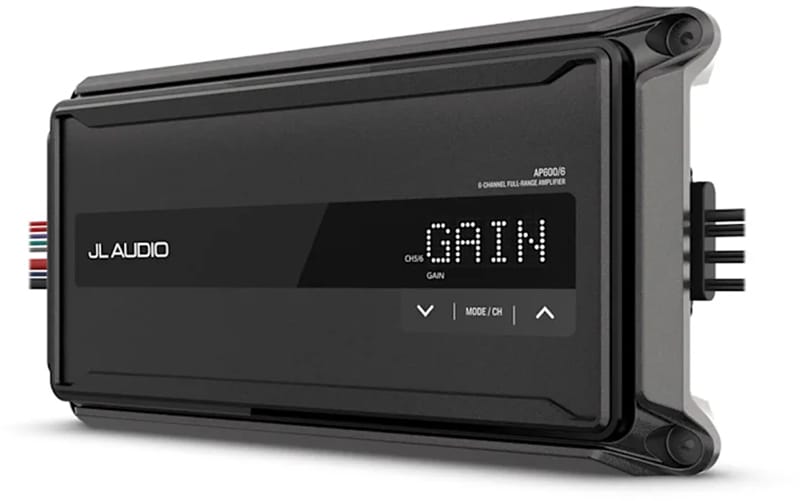
Before we dive into the specifics of the AP600/6, let’s look at the features common to the entire AP Series of products. These amplifiers were designed to provide ultra-reliable performance in marine, powersport and even motorcycle applications. They are completely free of analog controls that might require removable panels or plugs. How did they accomplish this? The amplifiers use a digital signal processor for sensitivity, crossover, bass boost, infrasonic filter, and polarity adjustments. The up and down arrow and Mode/CH buttons on the front panel, combined with a simple dot-matrix display, make it easy for your installer to complete the configuration process. With the amplifier completely sealed, it has an IP67 water and dust intrusion rating.

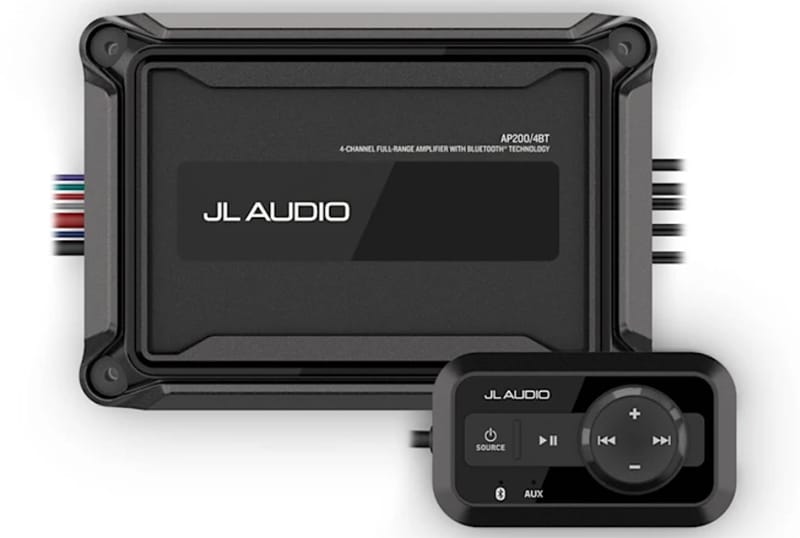
The AP Series includes four products: the four-channel AP300/4, rated for 50W x 4 into four ohms or 150W x 2 into a pair of four-ohm bridged loads; the monoblock AP300/1, which can deliver 300 watts into a two-ohm load; and the impressive AP600/6, a staggered power six-channel amp. There is also an amp called the AP200/4BT. This amp is rated a 4 x 40 watts into four ohm and includes a BT audio streaming receiver and a controller to adjust volume, track selection or source (BT or Aux input).

JL Audio AP200/4BT
The JL Audio AP200/4BT is a four-channel amp with Bluetooth A2DP and AVRCP.

JL Audio AP600/6 Specifications

The six-channel AP600/6 is rated to deliver 50 watts per channel into four ohms for the four main outputs and 100 watts per channel to channels five and six. These last two channels can be bridged to provide 300 watts into a single four-ohm load. At 2 ohms, the main channels deliver 75 watts, and channels five and six deliver 150 watts each. The amp isn’t designed to drive a two-ohm load in mono. This is an ideal solution for marine applications with four main speakers and two tower speakers, or could be used with two towers and a subwoofer – just to name a few configurations.

Additional specifications include a CTA-2006-D-compliant signal-to-noise ratio of better than 70 dB when referenced to 1 watt of output from 20 Hz to 20 kHz. Frequency response is listed as being 20 Hz to 20 kHz with a tight tolerance of 1 dB. Idle current is between 1 and 1.5 A, and dark current is specified to be under 1 mA. The six-channel amp has low- and high-voltage signal input ranges that accept 0.2 to 2 or 0.8 to 8 volts RMS.

All three pairs of channels can be run full-range or have high- or low-pass filters applied. The filters in the amp use second-order -12 dB/octave slopes and are adjustable from 20 to 500 Hz. The bass boost is centered nice and low at 37 Hz and can boost around this frequency by up to 18 dB. The AP600/6 has an adjustable infrasonic filter on channels five and six that’s adjustable from 20 to 50 hertz with a second-order slope. This amp doesn’t have a polarity reverse adjustment in the menu.

The amp has an Easy Tune mode that allows it to work with select Fusion source units with DSP and the Fusion Audio smartphone app.

JL Audio AP6006
A dot-matrix display on the front panel makes setting up the amp easy for your installer.

Connections and Installation

Electrical connections are on pigtails at either end of the amp. The left side has six pairs of 18-AWG speaker-wire connections, along with a remote turn-on connection and an 8-AWG connection. These connections are 10 inches long. The right side has three pairs of RCA jacks and a factory service USB port connection. The amp doesn’t have a built-in over-current protection device, so your installer should install a 70-amp fuse on the end of the power wire. Four-AWG should be run to the battery connections to ensure efficient operation.

Footprint-wise, the AP600/6 measures 11.81 inches (30 cm) long, 5.9 inches (15 cm) wide, and is 1.86 inches (4.7 cm) thick. These dimensions exclude the wires and their injection-molded strain reliefs. The amp mounts using the provided M4 x 35mm (approx. #8 x 1-3/8) fasteners that pass through the corners of the cast aluminum heatsink.

Upgrade Your Marine or Powersports Application with JL Audio AP-Series Marine Amps Today!

Whether you are shopping for a small amp with a Bluetooth receiver to power a system in your fishing boat, or you want a higher-power solution like the AP600/6 for a small cruiser, the new AP Series of amplifiers from JL Audio should have what you need. Drop by a local authorized retailer today. You can find out more about the AP Series amplifiers by visiting the Garmin website.

Be sure to follow JL Audio on Facebook, Instagram or YouTube to learn more about their impressive automotive, marine, and powersport solutions.

This article is written and produced by the team at www.BestCarAudio.com. Reproduction or use of any kind is prohibited without the express written permission of 1sixty8 media.
Filed Under: ARTICLES, Marine Audio, PRODUCTS, RESOURCE LIBRARY Tagged With: JL Audio

How Does a Police Radar Gun Work?

Police Radar

Police officers in North America have been using radar guns to catch speeders since 1949. This relatively simple technology evolved from military applications before World War II, where long-range installations were the size of a medium-size apartment building. Modern radar guns aren’t quite pocket-sized, but they are easily transportable and can be hand-held or installed permanently in a police vehicle. Let’s look at how a radar gun works.

How Does Speed-Detecting Radar Work?

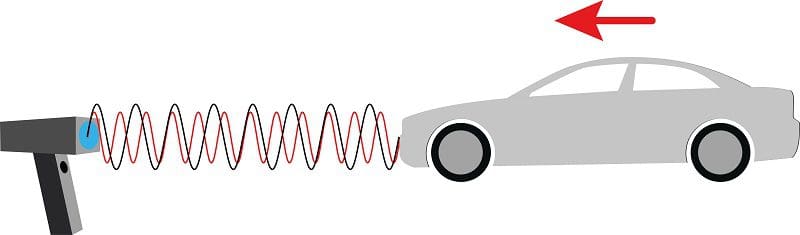
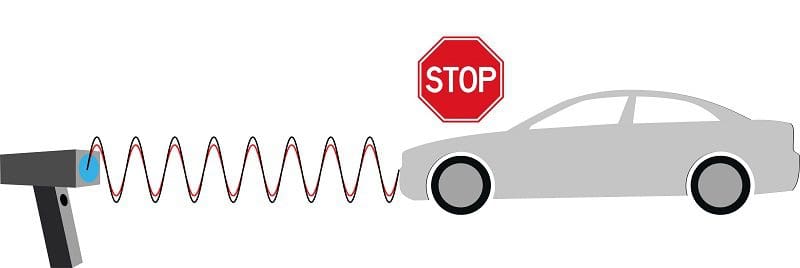
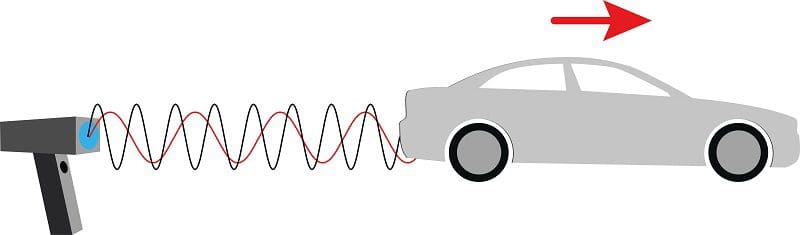
In simple terms, a radar gun transmits a narrow beam of radio-frequency energy out the front of the gun and looks for that signal to be reflected back to the gun after bouncing off an object. Unlike lidar and laser guns, the speed measurement is calculated by how much the received signal has changed in frequency after reflecting off the moving object. This phenomenon is called a Doppler effect and is the same reason that a car sounds different as it approaches and drives away from you.

Police Radar
Radio frequency signals bouncing off a stationary object are reflected to the source at the same frequency.

Please Explain Doppler Effect to Me!

Imagine that you have a tennis ball machine shooting balls at a stationary object once every second. The balls bounce back to the machine and arrive once per second. If you start to move the object toward the ball launching machine, the balls bounce back faster and faster as the object approaches the machine. This increase in return speed represents an increase in frequency.

Police Radar
Radio frequencies that bounce off of an object moving away from the radar gun are reflected at a lower frequency.

If an object is moving away from the tennis ball machine, it will take longer for each ball to bounce back, thus representing a decrease in frequency. The digital signal processor in modern radar guns is configured to analyze the changes in the reflected signal very quickly and display a speed reading in less than a second.

Police Radar
Radio frequencies that bounce off of an object moving toward the radar gun are reflected at a higher frequency.

Different Radar Bands

Police RadarIn North America, police officers use radar guns that operate in the X, K and Ka band frequency ranges. X band is the oldest technology and operates between 8 and 12 GHz; the K band is between 18 and 27 GHz; and the Ka band is between 27 and 40 GHz. X band radar is prone to interference from automatic door opening systems. K band (K is short for Kurz, which is the German word for short) and Ka (K-above band) radar are less resistant to atmospheric absorption than X band and less effective over long distances. Most of the new radar guns such as the Stalker II and the Kustom Talon use Ka band signals, so if your detector goes off, you know you need to react right away.

Radar Detectors Provide Early Warnings

Unlike lidar, the radar signal isn’t as precise at long distances, allowing it to spread well beyond the vehicle being measured. The high-sensitivity radar receiver in a radar detector is tuned to pick up extremely low-level signals and alert you that radar is in use. You need to act quickly when a radar detector goes off. Your local specialist mobile enhancement retailer can help you choose the perfect portable or custom-installed radar for your application and ensure that the system is installed cleanly. Drop by and find out what’s available today!

This article is written and produced by the team at www.BestCarAudio.com. Reproduction or use of any kind is prohibited without the express written permission of 1sixty8 media.
Filed Under: ARTICLES, PRODUCTS, Radar Detectors, RESOURCE LIBRARY

Product Spotlight: KICKER KEYLOC

KICKER KEYLOC

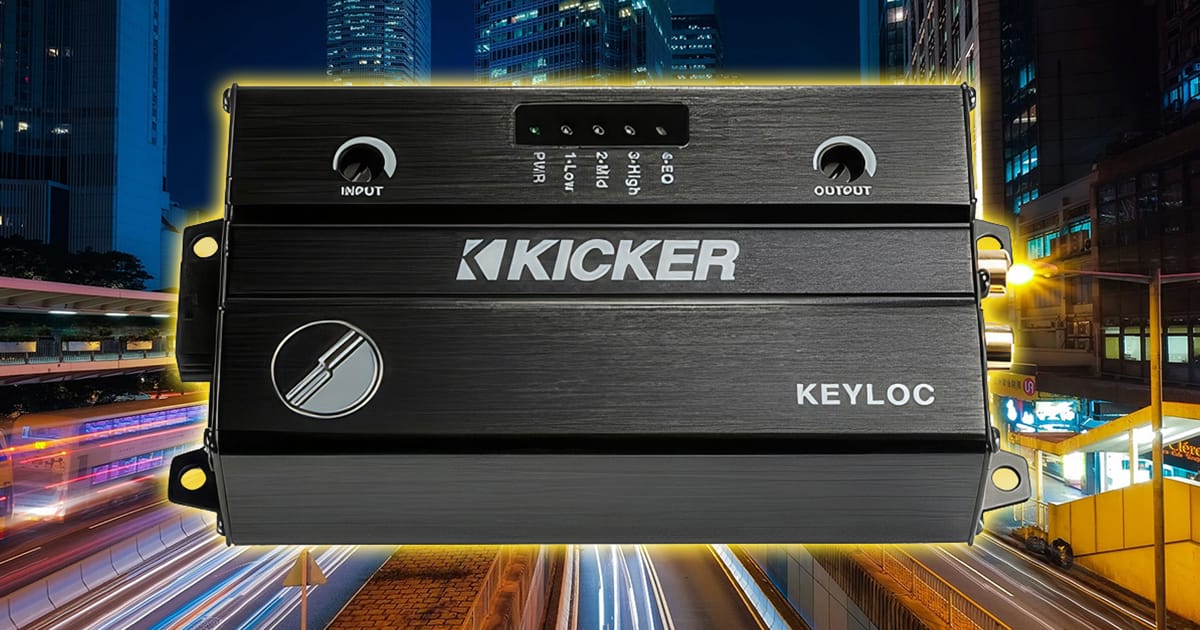
There are a dozen or so high-quality line output converters available to help your installer integrate an amplifier into a factory-installed audio system. That said, most of them are simple devices that do nothing more than adjust voltage gain and perhaps apply some equalization to the signal. KICKER’s KEYLOC is a unique solution because it features a built-in digital signal processor that undoes equalization, delays, and all-pass filters applied to the factory signal. The goal is to establish a clean signal that you can build on. Let’s check out the outstanding KICKER KEYLOC.

Basic Features of the KICKER KEYLOC

Let’s start with the basics. The KEYLOC is a two-channel line output converter that can accept up to 10 volts of signal in low-level mode and an impressive 40 volts in high-level mode. In low-level mode, the KEYLOC presents a 60-ohm load to the driving amplifier. Many factory-installed source units and amplifiers will go into protection mode without a proper load. External resistors are available from KICKER if needed for high-level operation. The maximum output of the KEYLOC is 10 volts.

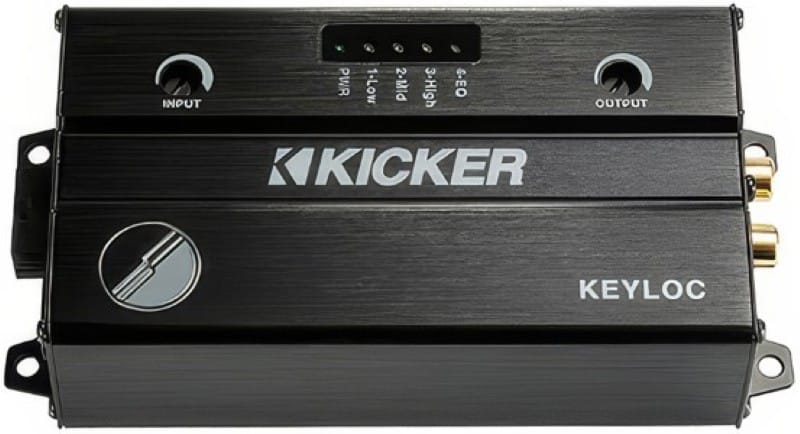
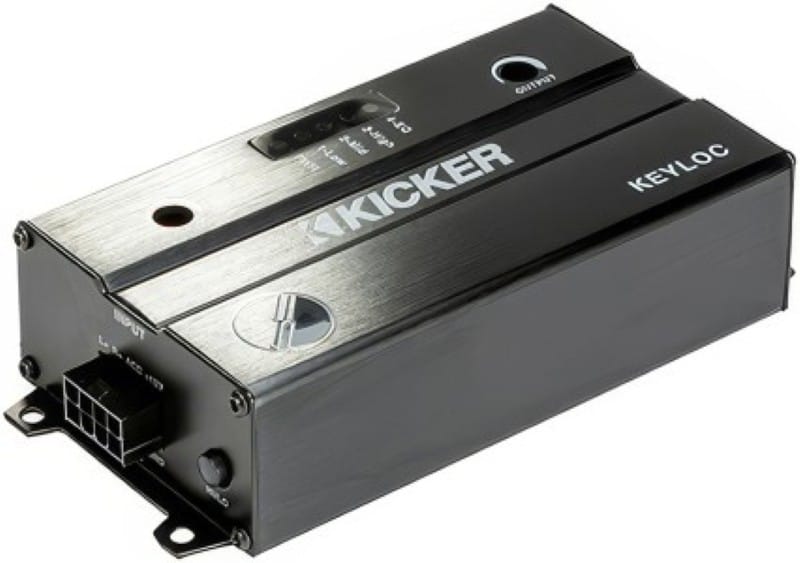
The KEYLOC measures 5.5 by 2.75 inches in footprint and is 1.375 inches thick. A Molex connector on the left side includes two speaker input channels, power and ground connections, and remote turn-on and remote output wiring. The remote output activates automatically when the KEYLOC detects a DC offset voltage on the input speaker wires, enabling an aftermarket amplifier to turn on. There are a pair of RCA output jacks on the right side of the chassis to feed your new amplifier.

The top panel of the KEYLOC features two stereo potentiometers and a display with five LEDs. The pots are for adjusting input sensitivity and output voltage. The LEDs indicate power and are part of the signal testing and KEY processing features of the KEYLOC.

KICKER KEYLOC
The LED display on the front panel of the KEYLOC provides your installer with information about frequency response and correction processing.

Audio Analysis Tool

Depending on the design of your factory audio system, it might be difficult to find a full-range signal. The Low, Mid, and High LEDs on top of the KEYLOC can be used with the provided pink-noise test track to determine whether you have a full-range signal. The Low indicator illuminates when there is sufficient audio information in the 20 Hz to 200 Hz range. The Mid indicator monitors 200 Hz to 2 kHz, and the High LED monitors audio above 2 kHz. If you are missing low- or high-frequency information, the KEY processing will not produce a full-bandwidth signal for your new equipment.

The KEY to Audio Excellence

The KEYLOC uses KICKER’s patent-pending KEY algorithm to analyze a special audio test signal. The signal includes sine sweeps, pink noise, and impulses, which reveal frequency response, signal delay, and all-pass filter processing. Once measured, the KEYLOC applies its own signal processing to eliminate these attributes from the audio signal. The result is a flat frequency response signal that will allow new speakers, amplifiers, and processors to sound amazing. The process is fully automated and takes between two and 10 minutes to complete. Your installer can even temporarily bypass the correction to demonstrate how much the system has improved thanks to the KEYLOC.

KICKER KEYLOC
The KEYLOC is small enough to hide behind the radio in your dash, yet powerful enough to correct even the most complex audio signals.

Why You Need the KICKER KEYLOC

Factory-installed audio systems are typically designed to extract the best possible performance from inexpensive speakers. As such, radios and amplifiers include signal processing such as equalization, delays, and all-pass filters to create an optimized listening experience. Don’t be fooled: this processing is present even in simple “radio-only” systems and isn’t exclusive to premium systems with complex multi-channel amplifiers.

The goal of upgrading a car audio system is, of course, to make it sound better. As such, you are likely to add subwoofers and new speakers to the vehicle. The equalization that worked with the factory speakers is not likely to be ideal for the higher-performance options you’ve chosen. Eliminating factory processing with a product like the KICKER KEYLOC is crucial to achieving great sound in your car, truck, or SUV. The KEYLOC is also great for motorcycles, side-by-sides, and marine applications.

Visit a KICKER Dealer Today

When it’s time to make your vehicle’s stereo sound better, drop by an authorized KICKER retailer to find out whether the KEYLOC is needed to undo the signal processing built into your factory-installed audio system. You can find an authorized KICKER retailer near you using the Dealer Locator on the KICKER website.

Be sure to follow Kicker on Facebook, Instagram and YouTube to keep up with the latest product releases from our friends in Stillwater.

This article is written and produced by the team at www.BestCarAudio.com. Reproduction or use of any kind is prohibited without the express written permission of 1sixty8 media.

Filed Under: ARTICLES, Car Audio, PRODUCTS, RESOURCE LIBRARY Tagged With: KICKER

Product Spotlight: KICKER MSC65

KICKER MSC65

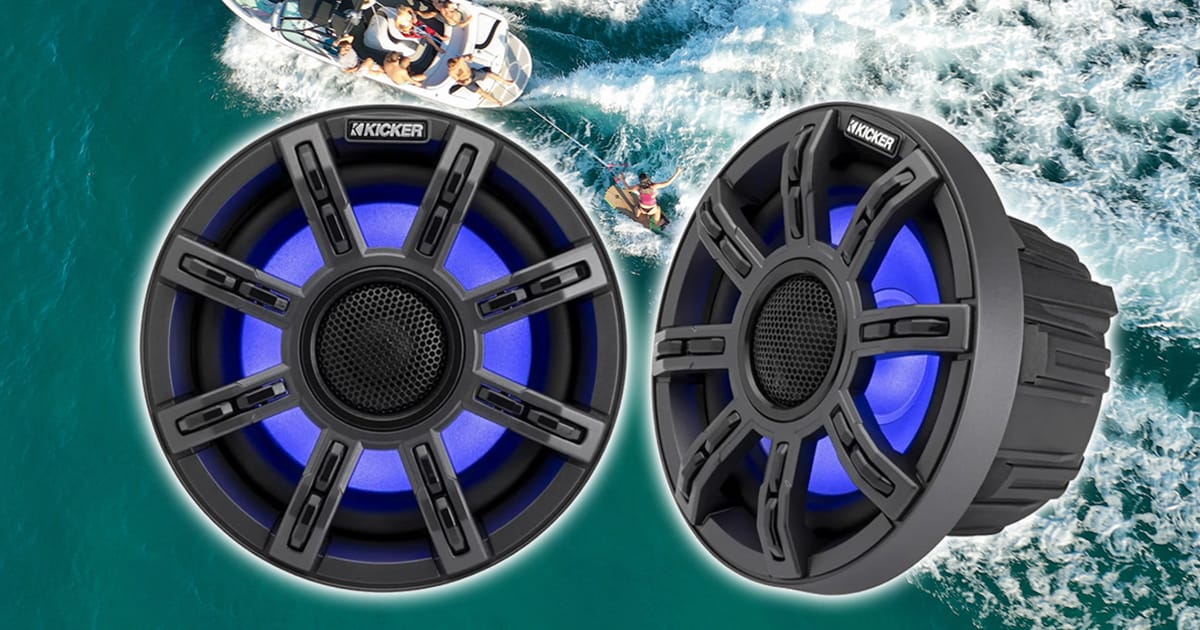
There are dozens of companies manufacturing marine-grade speakers. That certainly doesn’t mean that all the speakers sound good and have equivalent performance. KICKER, a company known for developing car audio, powersports and marine audio solutions, recently launched their M-Class Premium Series of marine products. This spotlight will look at the MSC65 6.5-inch coaxial speaker from this high-end family. Let’s check it out!

MSC65 Specifications

The KICKER MSC65 speakers have a published frequency response of 55 Hz to 25 kHz with an efficiency of 89 dB at 1W/1M. Recommended amplifier power is 15 to 100 watts, while peak power handling is 200 watts. The mounting requirements are a 5-7/16” hole with 3-9/16” of depth behind them.

Features of the KICKER MSC65

The MSC65 is a 6.5-inch coaxial that’s designed around a glass-filled nylon chassis. The chassis provides a stable platform for the magnet and moving assembly. At the heart of the speaker is a carbon-fiber-infused polypropylene woofer cone. A Santoprene synthetic rubber surround provides a compliant connection at the top edge of the cone that will last for many years.

For a tweeter, each speaker uses a textile material called Teteron to provide smooth, audiophile-grade performance. The tweeters have a diameter of 28mm (1.1 inches), so they can play low enough to prevent the woofers from becoming directional. The speakers use an integrated -12 dB/octave passive crossover at 3.2 kHz, which helps to ensure smooth and natural sound.

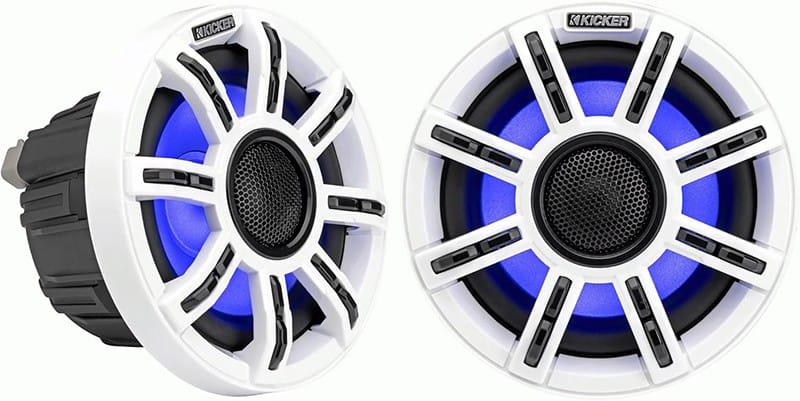
A perforated metal mesh grille protects the tweeters. An eight-spoke grille above the woofer cone supports the whole assembly. This eliminates the need for a pole piece, thereby increasing the woofer’s cone area to improve efficiency and bass production. Each pair of speakers includes both the white and charcoal grilles.

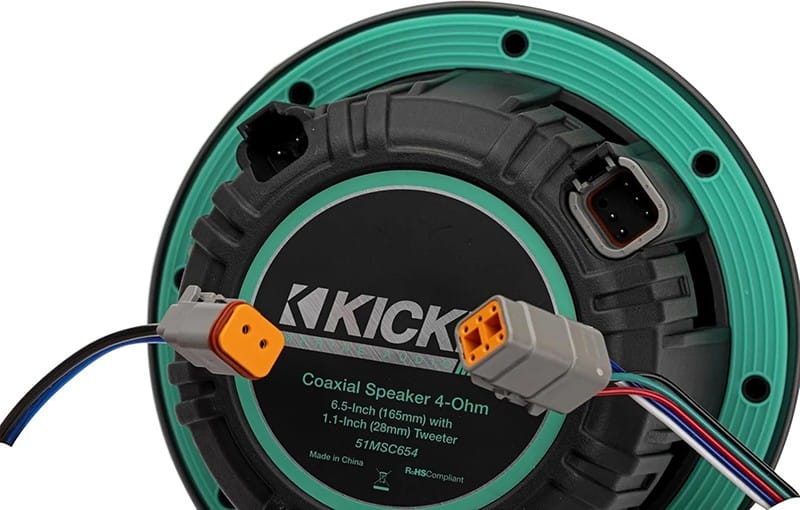
Electrical connections for the speaker are made via two-position Deutsch-style connectors to ensure a reliable, water-resistant connection. The speakers feature RGBW LED illumination, which lights up the cone from an LED strip wrapped around the tweeter’s neodymium magnet. The optional KMLC LED Lighting Remote controller can control the five-wire lighting system. Alternatively, the lighting can be hard-wired to a specific color to match your boat.

KICKER MSC65
The MSC65 set includes both charcoal and white grilles along with RGBW lighting to add a little extra style.

Real Marine™ Products

KICKER has invested significant resources into ensuring the entire series of M-CLASS products is up to the toughest challenges Mother Nature can dish out. All the speakers and subwoofers are tested for resistance to corrosion from salt under the ASTM B117 standard. They are also tested for colorfastness and resistance to chalking or fading due to prolonged UV exposure under the ASTM G154 standard. Finally, they have an IPX66 water-resistance rating thanks to integrated mounting gaskets on the backs of all the speakers. You can be confident that your purchase from KICKER will last for many years.

KICKER MSC65
Speaker wire and illumination connections are handled by weather-resistant Deutsch-style connectors that are molded into the chassis.

Other KICKER M-Class Solutions

Aside from the MSC65 6.5-inch coaxial speakers, the M-Class line includes 8-inch coax speakers along with 6.5 and 8-inch component speaker sets. The series includes 10 and 12-inch subwoofers designed for compact enclosures or infinite baffle applications. There is also a compact marine-grade subwoofer enclosure with a 10-inch subwoofer and a matching 10-inch reFLEX passive radiator to improve low-frequency efficiency.

Upgrade Your Boat with KICKER M-Class Speakers and Subwoofers Today!

If the sound system on your boat doesn’t put a smile on your face when you turn up the volume, drop by an authorized KICKER retailer today and ask them about the amazing new M-Class marine audio products like the MSC65. You can find an authorized dealer using the locator tool on their website. For more information on KICKER marine, powersports and car audio products, be sure to follow them on Facebook, Instagram, and of course, their amazing YouTube channel.

This article is written and produced by the team at www.BestCarAudio.com. Reproduction or use of any kind is prohibited without the express written permission of 1sixty8 media.
Filed Under: ARTICLES, Marine Audio, PRODUCTS, RESOURCE LIBRARY Tagged With: KICKER

Product Spotlight: Pioneer DMH-W3050NEX

Pioneer DMH-W3050NEX

Pioneer and car audio go together like coffee and cream or a hot dog with ketchup — classic pairings that make sense. On that note, we are going to take a look at one of their NEX-Series double-DIN multimedia receivers in this spotlight. Let’s check out the DMH-W3050NEX.

Pioneer DMH-W3050NEX Platform

For most of us, describing a multimedia receiver as a double-DIN solution would tell us all we need to know. The DMH-W3050NEX is somewhat unique in that the radio’s chassis is single-DIN, while only the front panel shares the standard 4-inch by 7-inch dimensions. This allows the radio to work with many dash kits that won’t accept a radio with a four-inch-tall chassis. Right out of the gate, you’ve got enhanced compatibility in terms of vehicles this works with.

The radio features a 6.8-inch (measured diagonally) capacitive touch front panel with a WVGA 800 x 480-pixel color display behind it. There are six capacitive-touch buttons on the left side of the screen, providing access to menus, voice recognition and volume control.

Communication and Entertainment Options

Every top-quality multimedia receiver, such as the DMH-W3050NEX, includes Android Auto and Apple CarPlay smartphone connectivity. In this case, both platforms feature wireless connectivity, thanks to integrated Wi-Fi. There’s no better way to communicate with family, friends and co-workers; choose the entertainment you want, or get detailed turn-by-turn navigation instructions to almost any location in North America.

The radio includes an HD Radio receiver for FM radio. HD Radio not only improves audio quality on compatible stations, but provides access to additional programming on the digitally broadcast channels. For example, you might have a high-resolution music stream on 97.3, then a non-stop news broadcast on HD2 and sports on HD3, all transmitted on the single 97.3 carrier frequency. Best of all, HD Radio doesn’t require a subscription – it’s completely free. The FM tuner also includes RDS decoding.

The DMH-W3050NEX has a USB port on the rear of the chassis that will charge your phone with up to 1.5 amps of current. You can also connect a USB memory stick (or other Mass Storage Class device) to play WMA, MP3, WAV, AAC or FLAC audio files. When parked, you can also play AVI, DivX, MKV, H.264, H.265, MPG, and several other video file formats. Impressively, the deck supports full HD 1920×1080 resolution video files – something not all multimedia receivers can do.

The radio features a Bluetooth 5.3 transceiver, allowing you to stream audio from a portable media player and select tracks using the ACRVP profile. Speaking of connecting smart devices, the radio works with Pioneer’s Weblink app on your smartphone. You can stream video from a source like YouTube directly to the radio.

Your installer can upgrade the radio with a SiriusXM satellite radio receiver. With SiriusXM, you can enjoy genre-specific entertainment almost anywhere in North America.

Pioneer DMH-W3050NEX
The shallow L-shaped chassis simplifies the installation process and allows the DMH-W3050NEX to integrate into vehicles where a full double-DIN radio won’t fit.

Sound Quality and Signal Processing

The Pioneer DMH-W3050NEX is high-res audio certified, and it will decode digital audio files with sample rates up to 192 kHz. The deck includes a built-in amplifier rated to produce 14 watts of power in compliance with the ANSI/CTA-2006 standard. The front, rear and subwoofer preamp outputs will deliver up to four volts.

In terms of audio processing, the DMH-W3050NEX comes equipped with a 13-band graphic equalizer, adjustable slope and frequency crossovers and signal delays. In standard mode, the radio provides front, rear and subwoofer outputs. In Network mode, the outputs are configured for low, midrange and high-frequency output signals.

The radio is compatible with the iDatalink Maestro RR and RR2 radio integration module. Depending on your vehicle, this interface allows the radio to communicate with the CAN network in your car, truck or SUV. You can see climate controls, dashboard gauges, tire pressure, battery voltage, and even vehicle diagnostic code information. If your vehicle isn’t compatible with the Maestro RR or RR2, your installer can likely connect to the steering wheel buttons using an interface like the Maestro SW.

Pioneer DMH-W3050NEX
The Pioneer DMH-W3050NEX boasts wireless connectivity for Apple CarPlay and Android Auto.

The Heart of a Premium Sound System

If you’re shopping for a well-equipped, high-performance multimedia receiver to upgrade your vehicle, visit a local authorized Pioneer dealer and ask about the DMH-W3050NEX. You can find an authorized retailer near you by clicking the “Find a Store” link from anywhere on the Pioneer website.

For more information on Pioneer source units, speakers, amplifiers, subwoofers and dashcams, follow them on Facebook, Instagram and, of course, YouTube.

This article is written and produced by the team at www.BestCarAudio.com. Reproduction or use of any kind is prohibited without the express written permission of 1sixty8 media.
Filed Under: ARTICLES, Car Audio, PRODUCTS, RESOURCE LIBRARY Tagged With: Pioneer

  • 1
  • 2
  • 3
  • …
  • 5
  • Next Page »

Recent Articles

Dragon Eye Radar Gun

How Does DragonEye ECCM Lidar Work?

February 22, 2026 

Over the past few months, we’ve talked about how radar detectors and laser defense systems work. Now it’s time to talk about the dreaded and often controversial DragonEye … [Read More...]

The JL Audio AP6006

Product Spotlight: JL Audio AP600/6

February 16, 2026 

A few decades ago, amplifiers designed for marine applications were not only huge but also inefficient and, crucially, not truly waterproof. Things have come a long way since then, … [Read More...]

A USB Thumb Drive

Don’t Put All Your Songs in One Folder on Your USB Drive

February 8, 2026 

With the rise in popularity of digital media files over the last decade, car audio enthusiasts find themselves being more likely to carry a USB memory stick than a stack of compact … [Read More...]

How Do Laser Shifter Systems Work?

January 25, 2026 

Sold as a means of preventing police officers from measuring the speed of your vehicle, laser shifter systems are amazing feats of engineering. Laser-based speed measurement guns … [Read More...]

A police officer holding a radar gun at oncoming traffic

How Does a Police Radar Gun Work?

January 11, 2026 

Police officers in North America have been using radar guns to catch speeders since 1949. This relatively simple technology evolved from military applications before World War II, … [Read More...]

Subscribe!

Enter your email address to subscribe to our website and receive notifications of new posts by email.

Join 30 other subscribers

Customer Reviews

Subscribe to Our Website

Enter your email address to subscribe to our website and receive notifications of new posts by email.

Durham Location


Get directions to Auto Acoustics

Services

  • Car Audio
  • Driver Safety
  • Motorcycle Audio
  • Remote Starters
  • Truck Accessories
  • Window Tint

Hours

Monday, Tuesday, Wednesday, Thursday, Friday9:00 am – 6:00 pm

Connect With Us

  • Facebook
  • Instagram

Copyright © 2026 Auto Acoustics · Privacy Policy · Website by 1sixty8 media, inc. · Log in


Loading Comments...