Auto Acoustics

Car Stereo and Window Tint

(919) 493-5473 Celebrating 35 Years!
  • Home
  • Services
    • ATV/UTV Upgrades
    • Car Audio
    • Driver Safety
    • Jeep Accessories
    • Marine Audio and Lighting
    • Motorcycle Audio
    • Remote Starters
    • Truck Accessories
    • Window Tint
  • About Us
  • Location
  • Customer Reviews
  • Contact Us
  • Work For Us
  • Facebook
  • Instagram

But the Box Power Ratings Say This Subwoofer Will Handle 1,000 Watts!

Power RatingsThere is no car audio topic more confusing and inconsistent than speaker power ratings. The fact is, the methods developed to test speakers are quite simple and reliable. If the speaker passes the test, print the number.

A long time ago, some unknown manufacturer felt it was important to tell consumers that their speaker would handle more power than a competitor’s product. We are talking about the Lear Jet, Jensen and Muntz days, not five or 10 years ago. Whoever that company was, printed a bigger number on their packaging and told their customers that their speaker was better because of it. Of course, competitors followed suit and countered this slightly bogus claim with an even more ridiculous rating. On and on this goes. We currently have 6×9 speakers that claim to handle 600 watts but have a tiny little 1-inch voice coil. The math simply doesn’t add up.

In this article, we are going to talk about speaker power ratings. We’ll explain what the ratings mean and how they are tested. When you are done reading this article, you’ll never look at a bogus MAXIMUM POWER specification the same way.

What is Power?

Power RatingsPower is a unit of energy that describes how much work is done over a specific period. We car guys know about horsepower and torque, and since you are reading this, you clearly have an interest in audio systems and have heard of the electrical unit of power known as the watt. By definition, 1 watt of power is equivalent to 1 joule of energy delivered over a period of one second. In terms you may be more familiar with, that’s equivalent to the work done in a circuit powered by 1 volt where 1 amp of current is flowing through the load. Exciting, isn’t it?

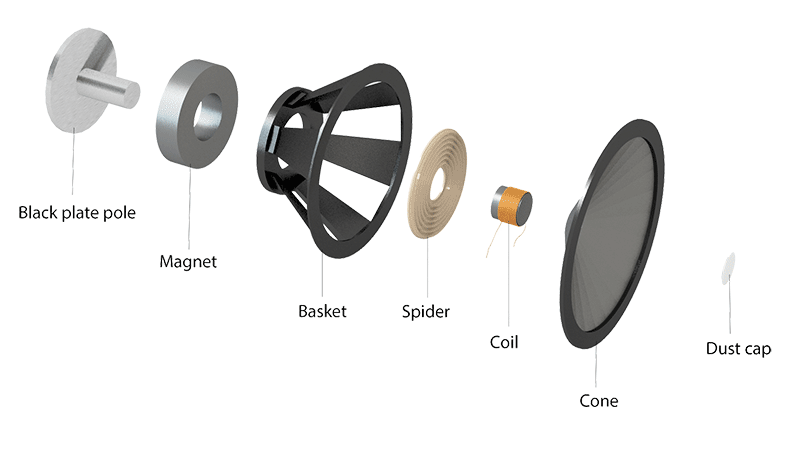
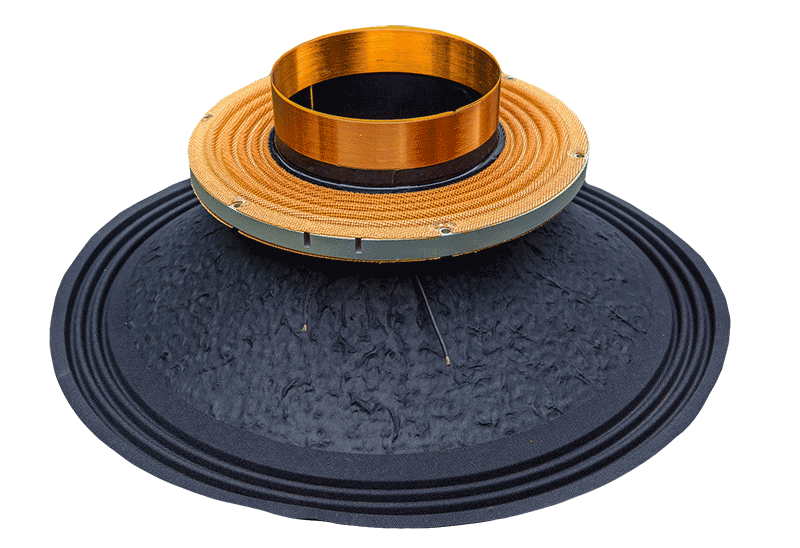
In our speakers, the power from our amplifier flows through the voice coil. The flow of electrons through the coil creates a magnetic field around the coil. Depending on the polarity (direction) of the current flow, the magnetic field may cause the coil and the attached cone to move forward or backward in the basket. As the signal coming out of our amplifier is alternating current, the speaker responds by moving back and forth with the changes in polarity.

What Happens When We Have Too Much Power?

Power RatingsThe electrical power from our amplifier is no different from the electricity that flows through an electric heating element on a stovetop. The heating element has a resistance, usually between 27 and 40 ohms. As we apply the 120v electrical signal from the wall to this coil of wire, work is done. For a 27 ohm coil, fed with 120 volts of electricity, 533 watts of work is produced. This “work” is the generation of heat.

When we send 100 watts of power to a speaker, almost all of that energy is converted to heat. Maybe 2 or 3 percent of that energy from the amp is converted to sound energy. Hopefully, you can see where this is going. When current flows through the voice coil, it gets hot. More current produces more heat. Eventually, the glue that holds the voice coil winding to the former starts to overheat and fail. At this point, the voice coil winding will likely unravel and usually gets jammed in the magnet gap, causing the speaker to stop playing.

As an aside, we could get into an entire discussion about power handling problems caused by excessive cone travel. For the purposes of this article, let’s assume we are operating the speaker within a frequency range where cone excursion is not an issue. We’ll talk about speaker excursion another time.

The Reference for Power Ratings

The current reference for testing automotive loudspeakers is the CEA-2031 standard. This set of test criteria include how and where the speaker under test is mounted and the content of the signal used to test the speaker. It is this audio signal, and how it is used, that is of interest to this article.

The power handling test track is a modified pink noise signal that is bandwidth limited between 40Hz and 10 kHz. The high-frequency content of the signal simulates the spectral content of a distorted bass or midrange signal. That’s right: If you distort a low-frequency signal, it creates harmonics. As such, you will send lots of extra midrange and high-frequency information to your speaker if the amp is clipping.

The CEA-2031 signal is recorded with very specific amplitude specifications. The test track is prefaced by a reference-level sound recording. In order to quantify the power level of the test, the reference signal is played and the amplitude is measured. On the engineering side, power tests are taken at RMS voltage levels. That voltage is converted to watts, based on the minimum impedance of the driver under test. For example, efficiency measurements are taken using voltages of 2 or 2.83 volts, which translate to 1 or 2 watts respectively on a 4-ohm speaker.

How They Test Power Handling

Power RatingsOnce the reference level is set, the test tone is played without making adjustments to the playback amplitude. The test track is designed to provide two simultaneous tests. The RMS voltage level of the track tests the speaker’s continuous power handling capabilities. The peak amplitude of the signal simultaneously tests the peak power handling of the speaker with an additional 3dB of input power.

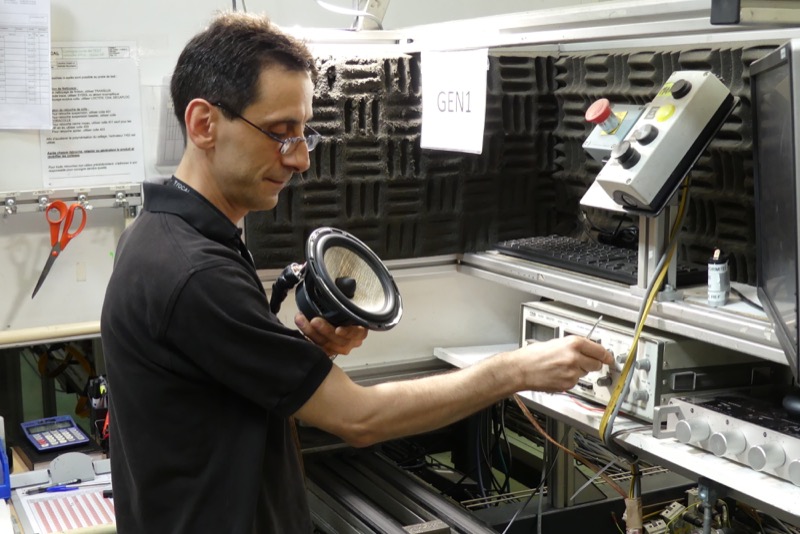
The device under test (speaker) is placed in a jig in a room with controlled environmental conditions. “The loudspeaker is rated for the power that it can withstand for 2 hours without a permanent change in acoustical, mechanical or electrical characteristics greater than 10%,” according to the specification. To achieve a higher rating, the test is to be repeated at a higher power level for the same time after a two-hour cool-down period.

Many companies test their products for longer. A lot of Japanese companies test their speakers for eight to 10 hours. Some premium speaker companies test their speakers for an awe-inspiring 100 hours. That’s right – more than four days playing this modified pink noise track.

There are variations of this test. For subwoofers, mounting the drivers in a sealed enclosure will increase the difficulty of the test dramatically. The air inside the enclosure will get hot and reduce the ability for the subwoofer to cool itself.

Where Do the Big Numbers Come From?

So, how can the marketing guys sleep at night with their insane power rating claims? We mentioned that physical power handling could be a concern. Of course, playing bass into a tweeter is going to result in disaster, quickly. Would playing a single tone for a period of time determine a power handling rating? What if a speaker can handle a 500 Hz tone for a few hours? Is that a power rating? Most certainly. Does it accurately describe the capabilities of the speaker? Not really.

Choosing Speakers for Your Vehicle

Power RatingsSo, now that you know how speaker power ratings are created, you can basically ignore them. The process of choosing a speaker should be based on performance, not specifications. Frequency response, efficiency and distortion performance separate good from run-of-the-mill. A speaker rated for 150 watts is not necessarily better than a speaker rated at 125 watts.

If you are buying subwoofers, power handling specs become a little more important. You won’t want to pair up a subwoofer rated for 200 watts to a 1,000-watt amplifier. If you want to keep things safe, match the subwoofer power rating to the amp rating. If you want to guarantee you’ll never blow the sub, buy a speaker that is rated for twice as much power as your amp.

Your local mobile enhancement retailer can help you design an audio system upgrade that sounds amazing, will play at the volumes you want and will last for years.

This article is written and produced by the team at www.BestCarAudio.com. Reproduction or use of any kind is prohibited without the express written permission of 1sixty8 media.

Filed Under: ARTICLES, Car Audio, Classic Car Audio, RESOURCE LIBRARY

Product Spotlight: Sony XAV-AX4000 Digital Multimedia Receiver

Sony XAV-AX4000

Over the last few years, Sony’s multimedia receivers have become increasingly popular. As more units have sold, retailers have asked for iDatalink Maestro integration, USB-C support and powerful sound customization. With Sony’s new XAV-AX4000, those requests and more have been fulfilled. Let’s look at what this sleek and impressive car audio source unit offers.

Clean Cosmetics and Intuitive Technology

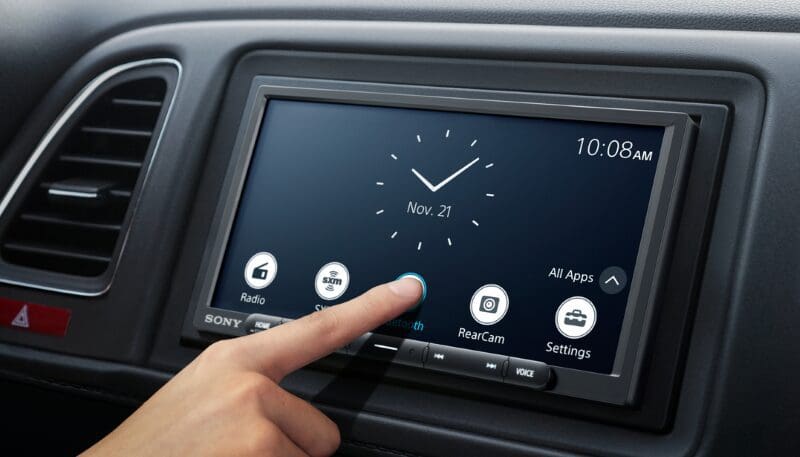
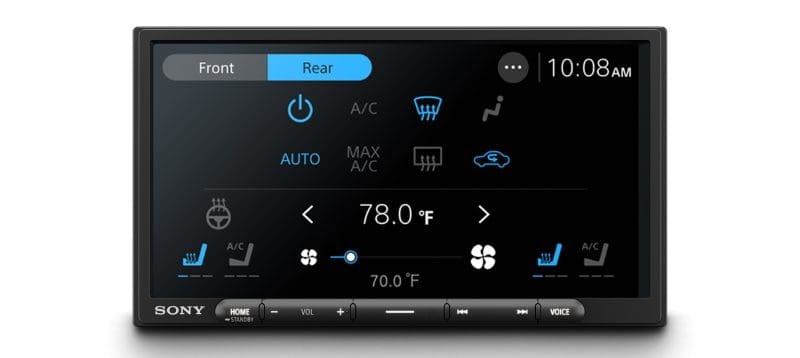
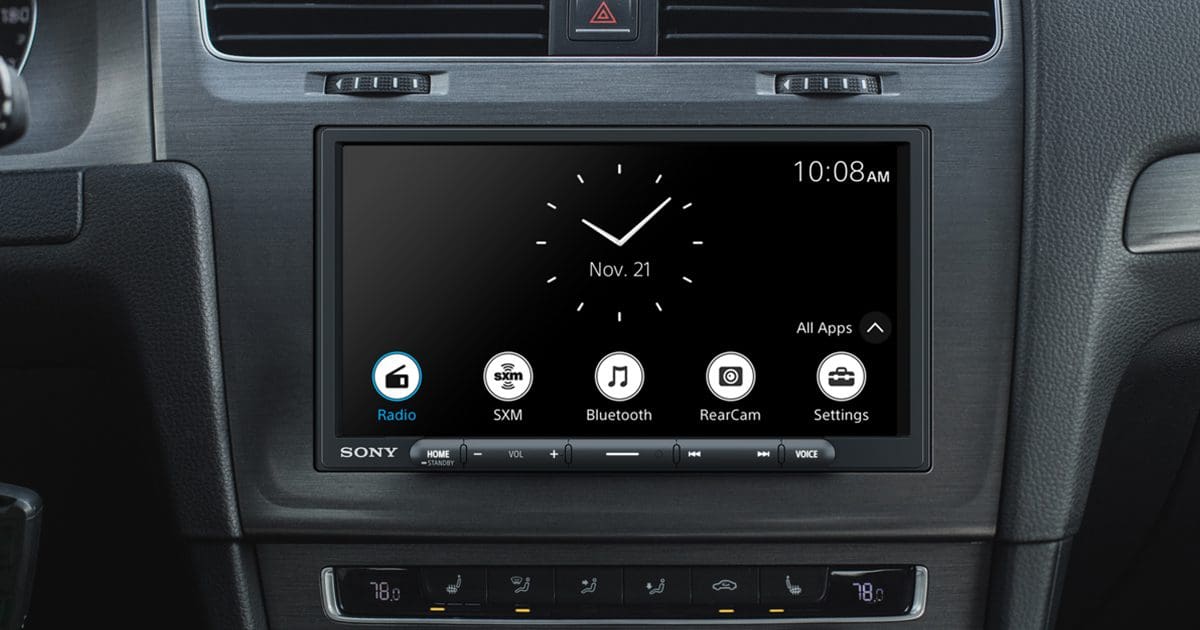
The first thing you’ll notice about the XAV-AX4000 is that it still looks great in the dash of your car or truck, and the user interface is as intuitive as it gets. Anyone can easily select source options or adjust settings without needing to read the owner’s manual. The icons on the screen can be expanded by selecting the “All Apps” icon on the screen and can be rearranged to create a layout that gives you quick access to the elements you choose on the home screen.

The 6.95-inch touchscreen display has a resolution of 800 by 480 pixels with a brightness of 600 Cd/m2. Four physical control buttons along the bottom of the screen make it easy to access the main menu, adjust the volume, change tracks or activate voice recognition features.

Sony XAV-AX4000
Sony multimedia receivers have one of the most intuitive menu systems on the market.

The radio includes wireless Apple CarPlay and wired and wireless Android Auto connectivity. Start your car, and the phone will connect automatically so you can make phone calls, send texts or get navigation directions from Google Maps or Waze. Of course, you can use your favorite streaming services like Pandora, Spotify, iHeartRadio or Apple Music to be entertained while you drive. A USB-C port on the rear of the chassis can be used with a USB mass storage device to play MP3, WMA, AAC, FLAC, WAV, ALAC, DSF or DSDIFF audio files.

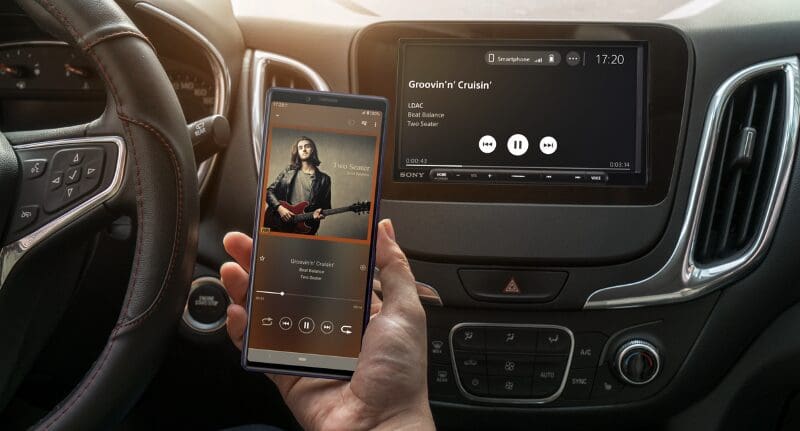
You can also use the USB-C port to charge your phone with up to 3 amps of current. The XAV-AX4000 supports the LDAC codec with Android smartphones for those wanting excellent Bluetooth streaming audio quality. Of course, the radio includes an AM/FM receiver with RDS information display.

Sony XAV-AX4000
High-resolution Bluetooth audio streaming is supported by Android smartphones that use the LDAC audio codec.

Audio Features Add Realism to Your Music

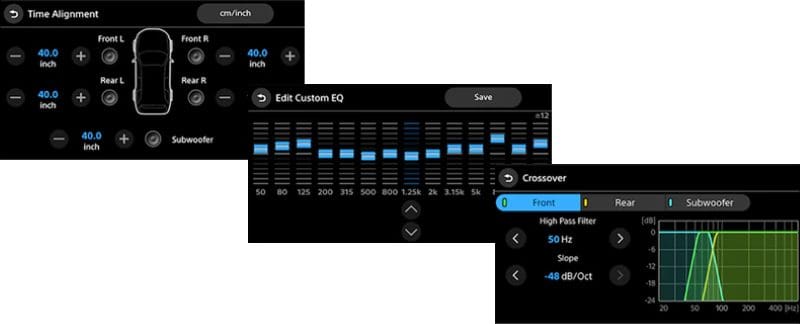
The XAV-AX4000 includes a 14-band graphic equalizer, front, rear and subwoofer signal delay setting adjustments and adjustable three-zone high- and low-pass crossovers so your installer can fine-tune your system to deliver excellent sound and detail. The preamp outputs are rated to provide up to 2 volts of output, and the built-in four-channel amp is good for 20 watts of power in compliance with the CTA-2006 standard.

Sony XAV-AX4000
Premium system configuration and calibration included with the XAV-AX4000 will help your car stereo sound great

iDatalink Maestro Integration

One of the most sought-after upgrades to the XAV-AX4000 is the inclusion of support for the iDatalink Maestro RR and RR2 integration modules. These interfaces will allow the radio to communicate with certain vehicles to provide steering wheel control, backup camera and auxiliary input connectivity. You can display vehicle information such as engine speed, vehicle speed, battery voltage or engine load on the dashboard display and check tire pressures and battery voltage on another. Many vehicles allow the Maestro interface to provide access to climate control adjustments. Your Sony retailer can let you know about the features that are compatible with your make, model and year of car or truck.

Sony XAV-AX4000
Compatibility with the iDatalink Maestro RR and RR2 allows the Sony XAV-AX4000 to communicate digitally with your vehicle.

Installer- and User-Friendly Design

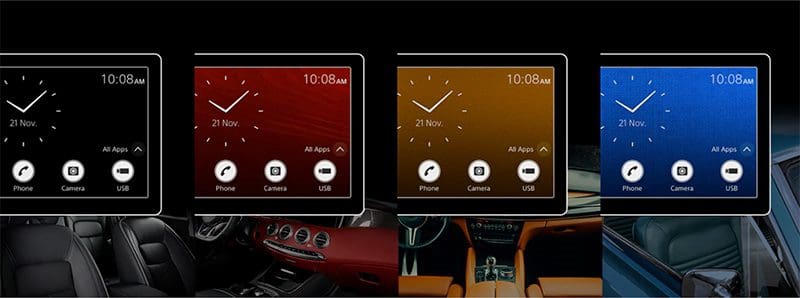
From an installation standpoint, the single-DIN chassis behind the double-DIN display dramatically simplifies installation. The radio includes an external Bluetooth microphone to deliver excellent outgoing audio quality. Another new feature is selectable and user-uploadable background wallpapers to match your vehicle interior or your mood.

The radio also includes a rear-view camera input with automatic reverse triggering, and the Maestro will include factory parking lines and sensor data in some vehicles. Finally, Sony has designed the XAV-AX4000 to wake up quickly, so your music starts playing when you are ready to go.

Sony XAV-AX4000
Users can select from several background wallpaper colors or upload their own image to personalize their radio.

Experience the Sony XAV-AX4000 Today!

If it’s time to upgrade the technology in your car or truck, drop by an authorized Sony retailer today and ask for a demonstration of the new XAV-AX4000 multimedia receiver. We’re sure you’ll be impressed by its performance, features, appearance and intuitive interface. You can find a Sony retailer using the dealer locator on the Sony Car Audio website. Be sure to subscribe to Sony’s YouTube channel and follow them on Facebook and Instagram to be the first to learn about their latest car audio product releases.

This article is written and produced by the team at www.BestCarAudio.com. Reproduction or use of any kind is prohibited without the express written permission of 1sixty8 media.
Filed Under: ARTICLES, Car Audio, PRODUCTS, RESOURCE LIBRARY Tagged With: Sony

Everything You Need To Know About SiriusXM Satellite Radio

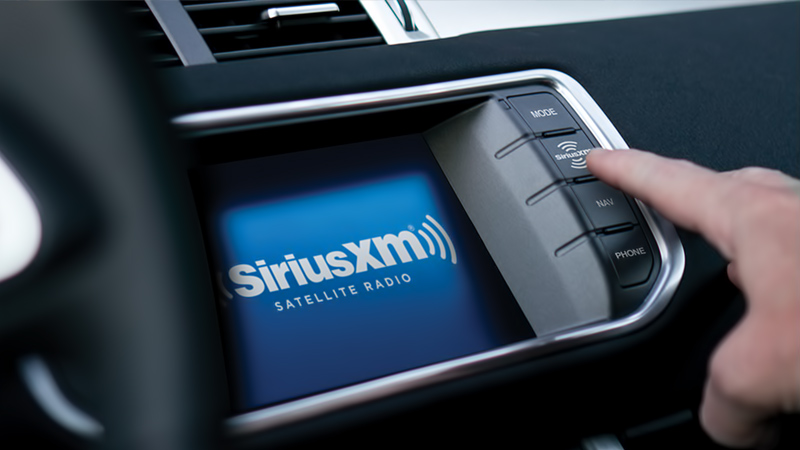
SiriusXM Satellite RadioIt seems you can’t go anywhere these days without hearing or seeing evidence of SiriusXM Satellite Radio. Satellite radio is touted as a commercial-free entertainment solution that can be accessed almost anywhere in North America. With more than 175 channels of music, comedy, sports and talk radio available 24 hours a day, there is always something to listen to. Let’s look at the how satellite radio began, how it works and why it has been so popular.

The Early Days of Satellite Radio

XM Satellite Radio evolved from the American Mobile Satellite Corp. AMSC was a consortium of companies that wanted to use satellite technology to broadcast telephone, data and fax information around the country. In 1992, AMSC formed the American Mobile Radio Corp. to develop a satellite-based digital radio service. AMRC was spun off from AMSC in 1998 as XM Satellite Radio. XM Radio was first to broadcast, launching on Sept. 25, 2001.

In 1990, Sirius Satellite Radio set out to attract customers and vehicle manufacturing partners to its proposed music service. After years of planning, development and licensing, Sirius launched three satellites in July 2000 and started broadcasting in January 2002.

Satellite radio was the hot ticket in the early the early 2000s, and partnerships with automakers were crucially important to each company. Sirius gained the support of Ford, BMW and Chrysler, while XM had General Motors, Honda and Toyota on board.

Satellite Radio Company Merger

SiriusXM Satellite RadioIn January 2005, the New York Post announced that Sirius and XM would merge into a single company on Feb. 19, 2007. The combined companies had about 14 million subscribers, but neither company had posted a profit. The result of the merger was SiriusXM – the brand we have now.

SiriusXM is now integrated into 75 percent of the new car market, with roughly 40 percent of those vehicle owners becoming subscribers. As of late 2017, there are about 32 million subscribers.

How Satellite Radio Works

Satellite radio is actually a very simple broadcasting system. The company has its main studios in Rockefeller Center in New York City and in Washington, D.C. Secondary facilities are in Los Angeles, Nashville and Memphis. The company plays music from its extensive catalog and has live performance spaces to host musicians and performers from all genres.

The information is broadcast to a set of satellites above the Earth that rebroadcast that information back to Earth. The broadcast covers most of North America. The satellite radio receiver in your vehicle (car, truck, boat or aircraft) uses a compact antenna to pick up the signal and extract the channel of audio you want to enjoy.

They Really Have Satellites?

SiriusXM Satellite RadioWhether it’s a live performance, your favorite music or a great discussion about religion or politics, all of the information is combined into a complex digital signal that is transmitted to a set of five active satellites that cover North America. XM-2 and XM-5 are in a geostationary position above the Earth. That is to say, they stay in the same relative position all the time. Positioned about 22,370 miles above the Earth, the satellites relay broadcast information from the studio transmitters to all of North America, excluding the left half of Alaska. XM-2 covers the west side of the country while XM-3 covers the east.

The Sirius satellites also operate in geostationary orbits. Sirius FM-6 covers the West Coast while Sirius FM-5 is located south of New Orleans to cover the East. Early Sirius satellites (Sirius 1, Sirius 2 and Sirius 3) crossed the planet in a figure 8 pattern that had two of the three over North America at any time.

As you can see, there have been many satellites over the almost 20 years of satellite radio. In total, nine have been launched, with the most recent being Sirius FM-6 on Oct. 25, 2013. Sirius FM-6 was the first to broadcast both Sirius and XM transmission frequencies.

The Benefit of Satellite Radio

SiriusXM Satellite RadioSo, what’s the big deal? Why do people gravitate toward satellite radio? The answer comes from its coverage. You can make a road trip from Miami, up to Montreal, across to Vancouver then down to San Diego without having to change the station. If you want to listen to Howard Stern for the entire 90 hours of driving, you most certainly can.

Conventional terrestrial broadcasts (AM and FM radio) are limited in their coverage areas. In fact, the FCC regulates the strength of the signal (to 70 dBu, or decibels relative to one microvolt per meter of signal strength). That way, a station frequency can be re-used again in a relatively nearby location. The actual distance varies because of atmospheric conditions but usually covers 75 to 100 miles from the transmitter. Because each station is responsible for its own content, if spaced perfectly, you’d need to change stations between 60 and 80 times. In reality, you’d need likely a few thousand attempts to find a station that was playing the type of music you wanted.

More Than Just Cars and Trucks

SiriusXM Satellite RadioSiriusXM satellite radio services have been synonymous with marine entertainment systems since they launched. Many people have cottages or camps in very remote areas that have few if any radio stations at all, so being able to enjoy their favorite genre of entertainment is fantastic. Likewise, receivers such as the SiriusXM Sound Station let you enjoy music in your home.

Things You Didn’t Know SiriusXM Could Do

Most of us are used to having satellite radio entertainment in the car, but there are several other applications for the system as well. Many aircraft, both small and large, can get weather and location information using a SiriusXM Aviation receiver. In fact, many Garmin aviation-specific products have the SXM receiver built in.

SiriusXM Satellite RadioSiriusXM Marine provides weather information including lighting strike locations and radar, fishing information and more. Many Garmin, Raymarine, Simrad, Lowrance, B&G and Furuno devices are compatible with SiriusXM Marine.

SiriusXM Music for Business offers entertainment solutions that are tailored to different business types. Serve Happy covers restaurants and bars, and Shop Happy is designed for retail stores. There are channels for waiting rooms, spa and fitness businesses, banks and even music dedicated to use when clients must be put on hold on the phone.

Currently only available on OEM source units, SiriusXM Traffic and Travel Link provide traffic flow information as well as local weather, fuel prices, sports scores and even movie listings. Traffic information mimics that of terrestrial RDS-TMC services in major urban areas.

The Cost of SiriusXM Satellite Radio

SiriusXM Satellite RadioWith the need to replace satellites roughly every 15 years, license music, pay hosts and celebrities, SiriusXM requires a subscription to access its services. In the U.S., prices start at $10.99 a month for 80 basic channels. If you want some of the artist-specific channels and MLB, NBA and NHL coverage, that rises to $15.99. To add Howard Stern, NFL and NASCAR coverage, the price is $19.99. Adding the ability to stream Sirius XM to your computer increases any of the above by $4 a month.

Enjoy the Entertainment You Want, Almost Anywhere

Whether you are in downtown New York or venturing to Supai, Arizona (the most remote community in the contiguous U.S.), enjoying your music is easy with SiriusXM satellite radio. If your vehicle doesn’t already have a satellite radio receiver, drop by your local mobile enhancement retailer and ask about your options to add SiriusXM.

This article is written and produced by the team at www.BestCarAudio.com. Reproduction or use of any kind is prohibited without the express written permission of 1sixty8 media.
Filed Under: ARTICLES, Car Audio, RESOURCE LIBRARY, Satellite Radio

7 Reasons for Hiring A Mobile Electronics Specialist to Work on Your Car

Hiring A Mobile Electronics SpecialistLet’s face it, not all of us are experts at everything. Maybe you’re an electrician or engineer and love to work on projects around the house. You might even be savvy when it comes to cars. You change your own oil and do your own brake jobs. Hey, if you can, why not, right? So, when do we know we need to look at hiring a mobile electronics specialist to help with a project or repair?

Cars are simple right? Switches, relays, light bulbs and wires aren’t hard to figure out, are they? If you can operate a multimeter, you can figure these things out. The problem is, most new cars don’t work that way anymore. Let’s look at how cars have changed, how audio and remote starter integration has changed and why it might be best to let a pro dive under your dash.

1. Vehicle Data Network Integration

Hiring A Mobile Electronics SpecialistA few decades ago, the electrical systems in our vehicles were completely analog. Devices were turned on, or off. The blower motor for the heater had four speeds. The engine had really simple temperature switches that would turn on the radiator fan. As time progressed, automakers started adding more and more features to new vehicles. Do you remember the first time you had a car with a keyless entry system? What about a car with a push-button start? These technologies were the beginning of the digital age for cars. Different modules around the vehicle talk to each other on a data network. This technology reduces the need to run as many wires through a car. Needing fewer wires saves weight and reduces cost.

In the good old days, if we wanted to see if a door was open, we’d check to see if the door pin was grounded. Now, we need to ask the computer if it’s open. We can’t simply tap into wiring for information — we need to speak the same language and we need a computer to do the talking.

Here’s a simple example that gives you a good idea of how complicated new cars are becoming. Around 2005, Chrysler, Dodge and Jeep decided to remove the analog accessory wire from their radios. To turn the radio on, a message from the vehicle computer would be sent to the radio. If you wanted to change the radio, you needed to buy an interface that could intercept that signal, then produce a conventional analog accessory wire output. A radio installation in these vehicles requires a module like the PAC Audio C2R-CHYNA or the Metra CHTO-01 for a new radio to work.

Properly trained and equipped mobile electronics installation technicians have access to the training and reference material to deal with vehicles that use data networks.

2. Equipped with the Proper Tools

Hiring A Mobile Electronics SpecialistAs a car owner, did you know that the wiring for your air bag system is, in most instances, protected with yellow wire loom under the dash and in the door sills? Probing the wrong wire within those harnesses can set off an airbag, or the entire airbag system. If you were leaning on the seat when the bag went off, you could be seriously injured.

In the old days, technicians used test lights and analog multimeters to look for the presence of signals on wires. You can easily damage a modern computer using a test light. Technicians have the right tools to gather the information they need without damaging anything in the vehicle.

3. Responsible for Damage

Hiring A Mobile Electronics SpecialistLet’s say you just can’t resist the urge to install a new radio in your car. You take the dash apart, remove the radio and cut off the factory radio plug. You start testing each wire in the harness for voltage and ground, then try to figure out which of the 15 or 20 wires are for speakers. If your vehicle happens to be one with a data network and you let a wire touch the battery wire, you could damage the vehicle computer. Chances are, getting the problem fixed is going to cost you at least several hundred dollars.

By hiring a professional, you are protected from unexpected costs. If they make a mistake, they’ll pay to fix it. It’s just that simple.

4. Module Programming

Hiring A Mobile Electronics SpecialistMost remote car starter installations require some sort of vehicle data network interface. Companies like iDatalink, Fortin and Directed offer several solutions that allow specific remote starter functions to communicate directly with the car computer. Each of these modules needs to be programmed for the year, make, model and specific trim level of vehicle. They are NOT generic.

Only authorized retailers have access to the information and programming tools required to configure these modules. Consumers simply can’t perform these tasks.

5. Manufacturer Warranties

If you read the warranty card included with products like a radio or amplifier, many manufacturers require that the device be installed by an authorized dealer in order for the warranty to be valid. Different companies have different guidelines. Installing something yourself may be covered under a 90-day warranty, but the full year is only available with proof of purchase and installation.

Some companies word their warranty statements in a way that offers an extended warranty when the product is purchased from, and installed by, an authorized retailer. With the complexity of modern devices, having a warranty is important.

6. Tricks of the Trade

Hiring A Mobile Electronics SpecialistIn most cases, we hire professionals to perform a task because they can do it faster and better than we can. In the mobile electronics industry, technicians develop processes to save them time and make the work they do more reliable. With that said, they are also trained to maximize the performance of the equipment they are installing.

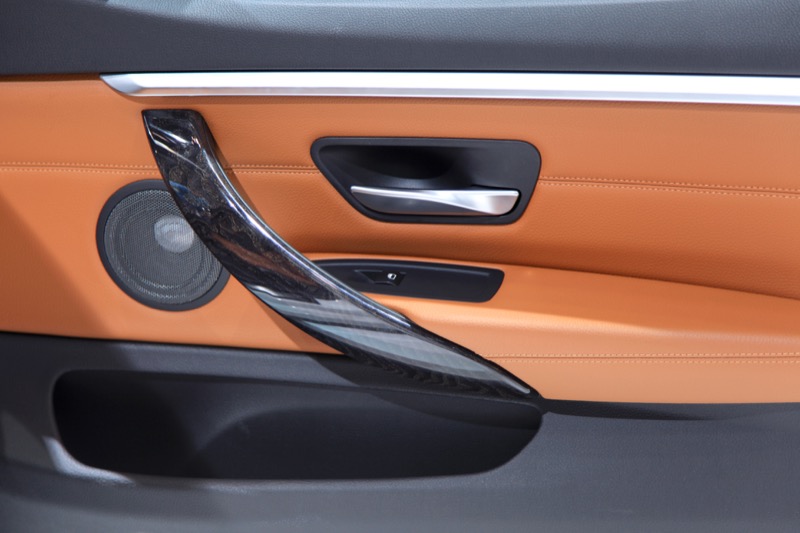
Let’s look at the installation of a set of component speakers. In most cases, the woofer will be installed in the factory door speaker location. When it comes to the tweeter, there are many options. The three most popular tweeter locations are up high in the door, the sail panel and in the A-pillar. Each offers different benefits and drawbacks in terms of performance. Experienced installers know this information and can work with you to determine which will yield results that match your goals.

7. Saving Time by Hiring A Mobile Electronics Specialist

One of the most common and logical reasons to hire a professional to perform a task is to save time. Most of us work Monday to Friday and want to relax on the weekend. Yes, there are many people who enjoy working on their vehicles in their spare time. By hiring an professional, you can drop your car off at the shop on the way to work, then come back after work and your new radio, subwoofer system or remote starter will be installed and ready to use. Hiring a professional can be a simple matter of convenience.

Visit Your Local Mobile Electronics Specialist

You’d never go to your dentist to have your eyes checked, and you wouldn’t go to the convenience store to buy a new computer. Companies exist to offer their expertise to those that require it. When it comes to upgrading the electronics and convenience systems in your car, truck or SUV – take it to an expert. You’ll save time, get the results you wanted and have someone who can provide training and ongoing support for your purchase.

This article is written and produced by the team at www.BestCarAudio.com. Reproduction or use of any kind is prohibited without the express written permission of 1sixty8 media.
Filed Under: ARTICLES, Car Audio, Driver Safety, Navigation, RESOURCE LIBRARY

7 things to Consider When Improving Your Classic Car Audio

Classic Car AudioYou have worked long and hard to get your pride and joy rebuilt. The paint is buttery smooth, the engine purrs like a kitten, and the interior smells of fresh carpet and leather. You stand back, enjoying her beauty. It’s time to go for a cruise. Roll down the windows, pull out on the freeway and enjoy! A few miles down the road, you think, “Hey, a little music would make this even better. Some of the classics! That’s what I need.” You turn on the radio, only to hear static engulfing your favorite radio station and tinny sound from an old paper speaker of your classic car audio system, mounted in the center of the dash. And you were so close to perfection!

Don’t fret – there are hundreds of expert mobile enhancement retailers around the country who can add a little music to your ride without messing with the look of the interior or affecting the value of the car. From a numbers-matching restoration to a junktastic rat rod or the car you had back in high school – adding modern features and great sound isn’t as hard as you think.

1) Define Your Classic Car Audio Objective

Classic Car Audio
Need plenty of volume for windows-down cruising? Let your salesperson know.

Before you go shopping, do some research. Google what other people have done with similar vehicles. Go to a cruise night or car show and ask questions. What car guy doesn’t want to talk about the mods he’s made to his car? Decide whether you need everything to be invisible, or if a little custom work would result in better sound from your system.

While these are harder to quantify, determine your goals and expectations for the system. If you want to sit in the driver’s seat and be able to hear Bruce Springsteen’s voice coming from the middle of the windshield, with his band spread evenly to the left and right, like you were sitting center-stage at a concert, then let your installer know. If you just need some music for a short cruise, that’s entirely achievable. If rocking out to Def Leppard and concert-like volumes are your speed, let ’em know.

How an audio system is designed is based on the goals for the system. A single set of speakers on the rear deck is only going to work for one of these examples. If that is your choice for the other two, you will be disappointed.

2) You’re Going to Need a Source Unit

Classic Car Audio
Sound Depot and Performance integrated a JL Audio Media system in the dash of this classic Bronco.

When it comes to source units, there are countless options. If keeping the vehicle looking absolutely 100% original is the name of the game, then there’s no way you are going to put a modern double-DIN multimedia receiver in the dash or a custom center console. That doesn’t mean you can’t still have great sound. One option is to mount a radio under the seat or in the glove box. Most radios can be controlled by a remote control, and some have smartphone control options. Launch an app on your phone, and that becomes the face of your radio. Pick a station, adjust the volume or select your favorite tunes from a USB memory stick.

If you don’t want anything visible anywhere, that’s not a problem. Your installer can mount a Bluetooth receiver in the dash with a tiny amplifier. The Bluetooth receiver becomes your source unit. You play music from your phone. The phone volume becomes the system volume. It’s pretty easy to use and completely invisible.

If you have headed down the path of a custom project, then working with your fabricator to integrate a modern head unit in the dash or center console is a great idea. You can go with something simple like a CD receiver, or step up to a multimedia receiver with Apple CarPlay and Android Auto. If you are going to be hitting the road, these smartphone integration solutions let you listen to incoming text messages and dictate responses, make phone calls, choose the music you want to listen to and provide turn-by-turn navigation, all by simply talking to the radio.

For a slightly less-conspicuous look, many people choose a marine radio and marine remote control as their source unit. You can hide the radio in the trunk or under a seat, and then control the unit from a wired remote control. These remotes often have LCD displays to let you know what’s playing, and include controls for volume, source selection and track adjustments. Most are sized similarly to standard 3-inch gauges like a tachometer or speedo.

3) Speakers Matter

Classic Car Audio
This custom rear deck grille by Audio Designs looks right at home on the deck of this Chevelle.

If you are a regular reader of BestCarAudio.com, then you will know that speakers are crucial to the overall performance and quality of any sound system. You can invest thousands of dollars in a head unit, amplifiers and signal processors, but if you don’t have great speakers, you won’t have great sound. Speakers are the only link between your equipment and your ears.

Just as with source units, the size of speakers you have installed and their location is going to depend on the style of your classic car. If you have a 32 Ford Model A Roadster, there aren’t going to be speaker locations in the dash to work with. Here are a few options to ensure your system sounds great.

If you do have factory speaker locations, use them. Buy the best speakers you can and have them installed in those locations. If you are worried about the look, have your installer add a piece of grille cloth under the factory grille to conceal any overly shiny attributes of the speaker. This is great for systems that are designed to “add a little music.”

Another option is to replace a factory panel with a custom piece. Let’s say you have a ’79 Corvette. Replace those factory kick panels with a set of custom panels and install a set of coaxial speakers in there. Your installer can finish the panels in a vinyl or leather that matches the factory pattern and ensure that the color looks just right with the rest of your interior. You can keep the factory panels in safekeeping in the event you need to return the car to stock condition.

4) You Can Never Have Too Much Power

Classic Car AudioNo, a blown 500 cubic inch engine is not part of the stereo upgrade recipe (but please don’t let us stop you if that’s part of the plan). We are talking stereo system power. To reproduce music, you need to deliver power to your speakers. If you want to listen at higher volume levels, you need more power. Most radios on the market offer between 18 and 20 watts of real, usable power. If you have a big motor or loud exhaust, or happen to be in a convertible, the radio alone won’t be enough to make your music audible when you’re cruising the Interstate.

Adding a quality amplifier to your system doesn’t just let you turn the volume up; it makes your music sound better at low to moderate volumes. That little bit of extra control is like having the torque of a big block behind your speakers. Your music will have more impact and sound more dynamic.

High-quality amplifiers start in sizes around that of a small brick. That’s right: Something as small as 9 by 3 by 2 inches can provide 50 watts per channel to four speakers without even breaking a sweat. These modern amps will fit up in your dash, under a seat, in a center console or under the rear deck without altering the functionality of your vehicle by taking up all sorts of space.

5) Electrical Systems Requirements

Classic Car Audio
Cars that aren’t regularly driven can benefit from smart charging solutions.

Your audio system works the same way as your engine does: If you want to make more power, you need to deliver more fuel. This might mean larger fuel lines and an upgraded pump if you are the kind of person who likes to have “a little more than stock.” If you install an amplifier in your car, then you have to be sure it is wired correctly. High-quality copper power wire is a must. Forget that cheap aluminum stuff – you don’t want any hassles. All connections have be electrically and mechanically secure to ensure proper power delivery. If you decide to go with a large amp, or have added a subwoofer (we’ll get to that next), then proper power delivery is crucial to ensuring your amplifiers will perform.

Your battery and alternator have to be up to the task as well. If you have a ’74 Beetle with a 50 amp alternator, you won’t be installing a 1,000 watt stereo and listening to it at full volume. Likewise, make sure that battery is in tip-top shape. If you don’t drive the car during the week, invest in a high-quality battery maintenance solution. Keeping that battery topped up will make it last a lot longer and ensure your car is ready to go when you are.

6) If the Shoe Fits, Add a Subwoofer

Classic Car Audio
Kingpin did a great job designing this trunk to hold subwoofers and amplifiers.

We are back to the discussion of what works for your vehicle. If you are headed to Pebble Beach, you may be reading the wrong article. If you are headed to a cruise night, then warming up the sound of your stereo system with a subwoofer is a very good idea. Forget the stereotype of kids driving down the street with their rap music blaring and body panels vibrating. Adding a subwoofer accomplishes two important tasks in terms of improving the performance of your sound system.

Subwoofers are specifically designed to reproduce the bottom two octaves of the music we listen to – that’s 20 to 40 Hz and 40 to 80 Hz. To reproduce these frequencies accurately, a speaker has to move a lot of air. A small 6.5-inch coaxial mounted in your doors isn’t going to produce a 35 Hz sound with any authority or detail. Adding a sub will add these frequencies to your sound system. Drums, bass guitar, a stand-up bass or a kettle drum with have warmth and impact. A subwoofer doesn’t have to rattle your teeth.

The second task a subwoofer accomplishes is to relieve the rest of your speakers from trying to reproduce bass frequencies. If your sub can play up to 80 Hz, then your door or rear deck speakers only has to play down to 80 Hz. Your smaller speakers will sound much better and be able to play those sounds above 80 Hz with more output and detail. Your entire stereo will sound better.

7) Research Your Partner

When you look for someone to work on a classic car (or any car, for that matter), you are trusting them to use their skills and experience to accomplish a task for you. In the same way that it can be hard to find a great mechanic, it takes research to find a great installer. Read reviews, look at examples of their work and talk to other classic car owners. There are some truly amazing installers in the mobile enhancement industry. Once you find one who “gets it,” stick with them. Don’t grind and haggle over a few bucks. Ensure the job is done right, with quality materials, excellent workmanship and extraordinary attention to detail.

Music Makes Every Road Trip Better

Whether you are taking a drive across town to visit a friend or want to join the Hot Rod Power Tour next year, having music along with you can make the trip a lot more enjoyable. Do some research, ask some questions and listen to as many car audio systems as you can. There is a solution for your classic car audio; it’s just a matter of working with the right retailer to find one that fits.

This article is written and produced by the team at www.BestCarAudio.com. Reproduction or use of any kind is prohibited without the express written permission of 1sixty8 media.
Filed Under: ARTICLES, Car Audio, Classic Car Audio, RESOURCE LIBRARY

  • « Previous Page
  • 1
  • …
  • 15
  • 16
  • 17
  • 18
  • 19
  • …
  • 30
  • Next Page »

Recent Articles

Dragon Eye Radar Gun

How Does DragonEye ECCM Lidar Work?

February 22, 2026 

Over the past few months, we’ve talked about how radar detectors and laser defense systems work. Now it’s time to talk about the dreaded and often controversial DragonEye … [Read More...]

The JL Audio AP6006

Product Spotlight: JL Audio AP600/6

February 16, 2026 

A few decades ago, amplifiers designed for marine applications were not only huge but also inefficient and, crucially, not truly waterproof. Things have come a long way since then, … [Read More...]

A USB Thumb Drive

Don’t Put All Your Songs in One Folder on Your USB Drive

February 8, 2026 

With the rise in popularity of digital media files over the last decade, car audio enthusiasts find themselves being more likely to carry a USB memory stick than a stack of compact … [Read More...]

How Do Laser Shifter Systems Work?

January 25, 2026 

Sold as a means of preventing police officers from measuring the speed of your vehicle, laser shifter systems are amazing feats of engineering. Laser-based speed measurement guns … [Read More...]

A police officer holding a radar gun at oncoming traffic

How Does a Police Radar Gun Work?

January 11, 2026 

Police officers in North America have been using radar guns to catch speeders since 1949. This relatively simple technology evolved from military applications before World War II, … [Read More...]

Subscribe!

Enter your email address to subscribe to our website and receive notifications of new posts by email.

Join 32 other subscribers

Customer Reviews

Subscribe to Our Website

Enter your email address to subscribe to our website and receive notifications of new posts by email.

Durham Location


Get directions to Auto Acoustics

Services

  • Car Audio
  • Driver Safety
  • Motorcycle Audio
  • Remote Starters
  • Truck Accessories
  • Window Tint

Hours

Monday, Tuesday, Wednesday, Thursday, Friday9:00 am – 6:00 pm

Connect With Us

  • Facebook
  • Instagram

Copyright © 2026 Auto Acoustics · Privacy Policy · Website by 1sixty8 media, inc. · Log in


Loading Comments...