Auto Acoustics

Car Stereo and Window Tint

(919) 493-5473 Celebrating 35 Years!
  • Home
  • Services
    • ATV/UTV Upgrades
    • Car Audio
    • Driver Safety
    • Jeep Accessories
    • Marine Audio and Lighting
    • Motorcycle Audio
    • Remote Starters
    • Truck Accessories
    • Window Tint
  • About Us
  • Location
  • Customer Reviews
  • Contact Us
  • Work For Us
  • Facebook
  • Instagram

Don’t Put All Your Songs in One Folder on Your USB Drive

Songs Folder

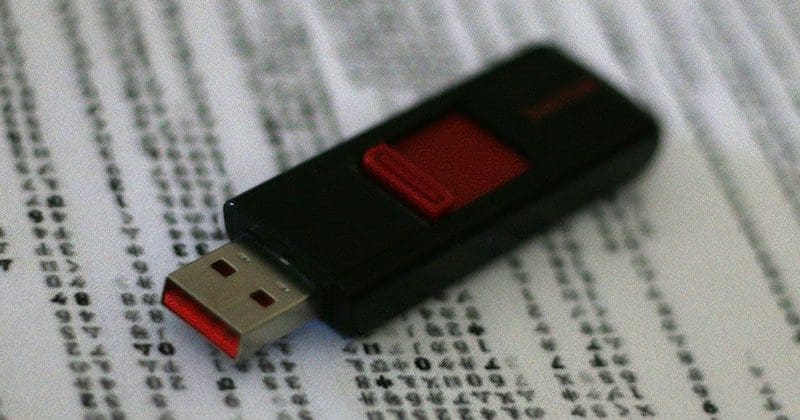
With the rise in popularity of digital media files over the last decade, car audio enthusiasts find themselves being more likely to carry a USB memory stick than a stack of compact disks. When it comes to organizing all those MP3, WMA, AAC and FLAC files, most manufacturers suggest that you don’t put all the songs in one folder. Read on to find out why.

How Car Radios Understand USB File Structure

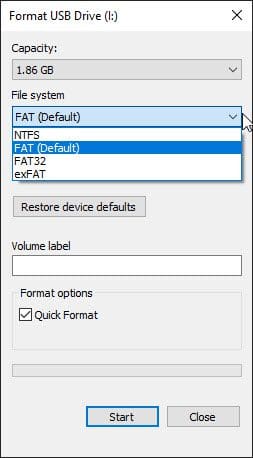
Unlike a computer, your car radio is very limited in its ability to interpret different USB drive formats and the subsequent file structure. Most systems require that the USB drive be formatted using the FAT or FAT32 file format. Some new multimedia receivers can understand NTFS and exFAT file formats, so larger storage devices can be used.
Songs Folder
You have several formatting options. Be sure to choose one that works with the capabilities of your receiver.

Next, you need to maintain a standard long file name format that allows for a total of 255 characters, including the file extension (.mp3, .wma or .flac). An important part of the standard is avoiding command characters such as /, \, *, :, ?, “, <, > and|. These characters may be misinterpreted by the system and result in a file being unreadable, or on extreme cases, cause the system to stop reading subsequent filenames.

Folder Structure and File Limits

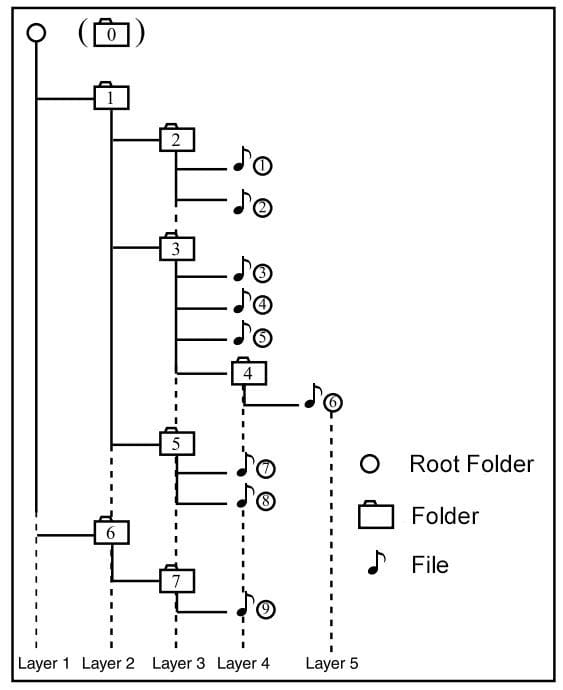
In most cases, you are limited to no more than eight folder layers. So, beyond the root folder, you may have subfolders by genre of music, artist name and album name. This configuration is fine as the music is stored four layers deep. It is worth noting that extremely long folder names may, depending on the radio and its available memory, cause problems. We recommend keeping everything as short and efficient as possible.
Songs Folder
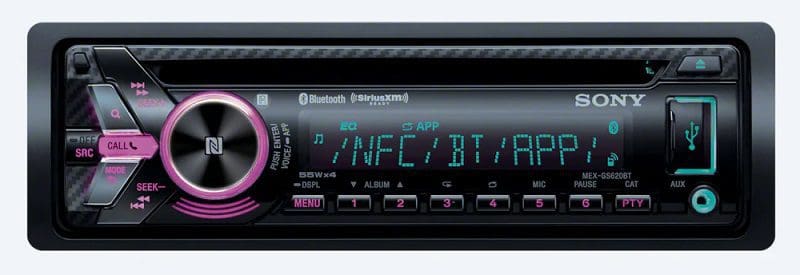
Choosing a radio with a USB port on the front panel makes playing your digital media collection quick and easy.

Different source units have significantly different limits on the total number of tracks they can play and the number of files or subfolders they can interpret. Many radios have a limit of 255 or 999 files or folders per directory and can only detect up to 999 files. Some radios increase this to 5,000 or 9,999 tracks. A few units on the market can read an impressive 65,535 files per folder, and there are a couple with supposedly no limits at all.
Songs Folder
Typical Folder Structure Format

Don’t Put All Your Files in One Folder

When you are planning on buying a new radio, it’s worth spending a few minutes to find out whether it will play your music as you have it organized on your USB stick. Some radios won’t randomize songs in different folders, and others are extremely finicky about the total number of files. If you need help choosing a receiver that will sound great and play your digital media collection, drop by your local specialist mobile enhancement retailer and give the radio you have in mind a try!

This article is written and produced by the team at www.BestCarAudio.com. Reproduction or use of any kind is prohibited without the express written permission of 1sixty8 media.

Filed Under: ARTICLES, Car Audio, RESOURCE LIBRARY

How Do Laser Shifter Systems Work?

Laser Shifter

Sold as a means of preventing police officers from measuring the speed of your vehicle, laser shifter systems are amazing feats of engineering. Laser-based speed measurement guns measure distances very accurately and very quickly. Police use these hand-held guns to pick out a single vehicle in heavy traffic and find out in a split second how fast it’s going. With no time to slow down, a laser shifter system is your only hope of not getting a ticket – assuming you are traveling above the speed limit.

How Do Police Laser Systems Work?

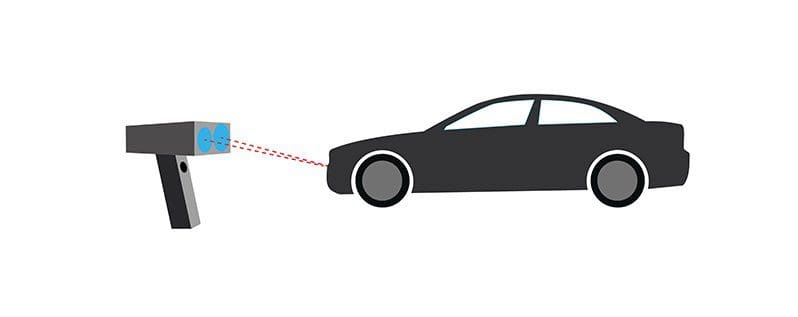
Police laser guns emit a series of narrowly focused light pulses at a target. The system measures the time it takes for those pulses to reflect back to the gun. Knowing the speed of light, the gun can calculate how far away the object is. If the series of pulses arrives back to the gun at an increasingly faster rate, the object is getting closer to the gun. If the time between pulse reflections is slower, the object is moving away. Using calculus (that math you learned in high school but never thought was necessary), the gun can calculate the vehicle speed, often in less than 0.3 of a second.

Laser Shifter
Police laser guns transmit a series of light pulses to determine your distance.

How Do Laser Defusers Work?

The laser defuser system uses a pair (or more) of transceivers on the front (and optionally the rear) of your vehicle to detect the light pulses from the laser gun. The transceivers have IR receivers that are similar to those used to detect signals from your TV remote control. As soon as the system detects a signal, it sets to work analyzing the pattern of pulses to determine what type of laser gun is being used. It compares the pattern to a look-up table and immediately starts broadcasting light pulses that are similar, but not identical, to those it received. This process happens in less time than it takes the gun to measure the vehicle speed. The pattern of confusing light signals and reflections from the vehicle prevents the laser gun from accurately determining your distance or speed.

Laser Shifter
The laser shifter system emits light pulses to confuse the information that the laser gun receives and prevent it from displaying your vehicle speed.

How Do We Use Laser Defuser Systems?

Laser ShifterThe key to being able to continue driving without interruption lies in how your laser shifter system is used, more than what it does. As soon as the system detects a signal, you will receive an alert so that you can start to slow down. Once at a safe speed, you can cancel the shifted signal transmission and allow the officer to take a reading.

The speed at which you complete the “slow and cancel” process is crucial to your success. If you lollygag and drive past the officer with the laser signal shifted, he or she will know what you are up to and may choose to follow you.

A smooth but efficient application of the brakes to prevent the nose of the car or truck from dipping, then a subsequent tap on the Mute (or similar) button should take no more than a few seconds. The officer will likely be in the process of taking a second measurement of your vehicle and, if you’ve done your job, will get a reading that won’t raise an eyebrow.

Laser Shifter
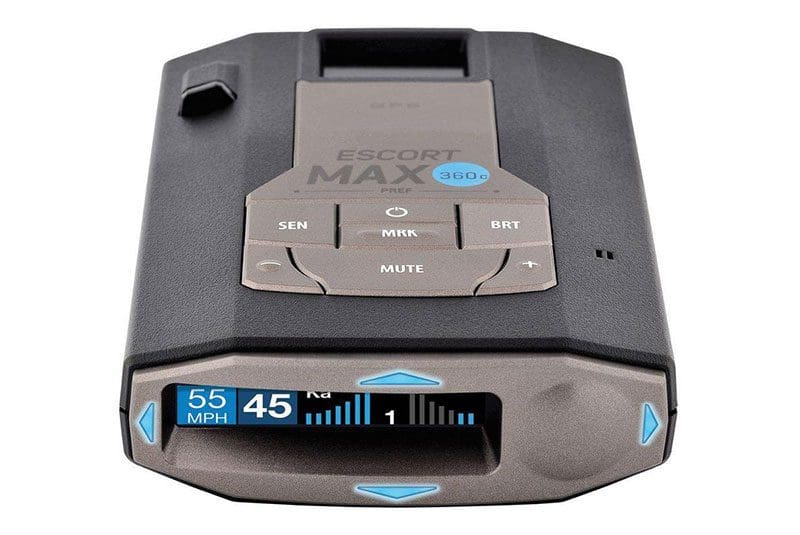
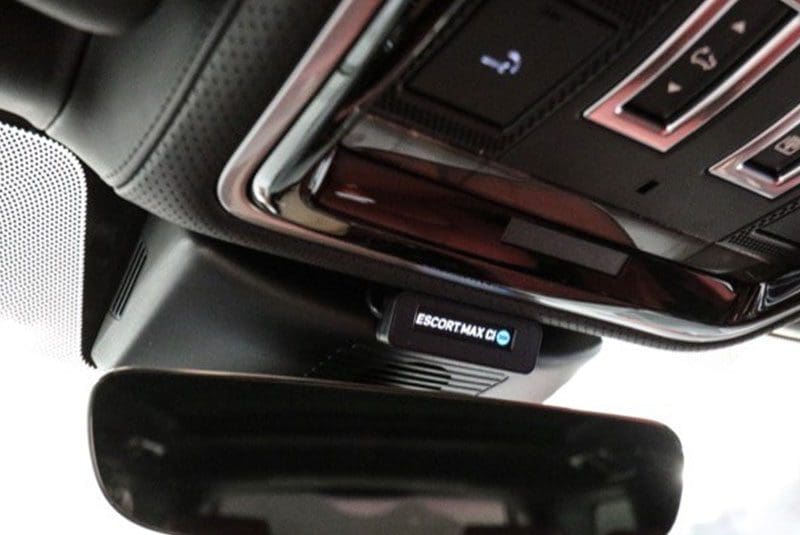
A beautifully integrated display from an Escort MAX Ci 360 in the overhead console of a Range Rover. Image courtesy of Ralph’s Radio in Vancouver, British Columbia.

Expert Installation Is Required

Laser ShifterOne final point we want to highlight is the importance of proper installation. Laser defusers, shifters, sensors, transceivers or whatever you choose to call them require very accurate installation. If they aren’t aligned perfectly and positioned according to manufacturer guidelines, the system may not function properly. Done wrong, your investment in protection will be rendered useless.

As with most premium automotive enhancements, choosing a retailer who has the tools, training and materials to complete the installation properly should take significant precedence over any other aspect of the project. Ask to see examples of their work and, if possible, have a look behind the scenes at how they mount components, run wiring and make connections. If it doesn’t look right to you, it probably isn’t.

Our team asks that you always obey all traffic laws and drive carefully at all times.

This article is written and produced by the team at www.BestCarAudio.com. Reproduction or use of any kind is prohibited without the express written permission of 1sixty8 media.

Filed Under: ARTICLES, Radar Detectors, RESOURCE LIBRARY

How Does a Police Radar Gun Work?

Police Radar

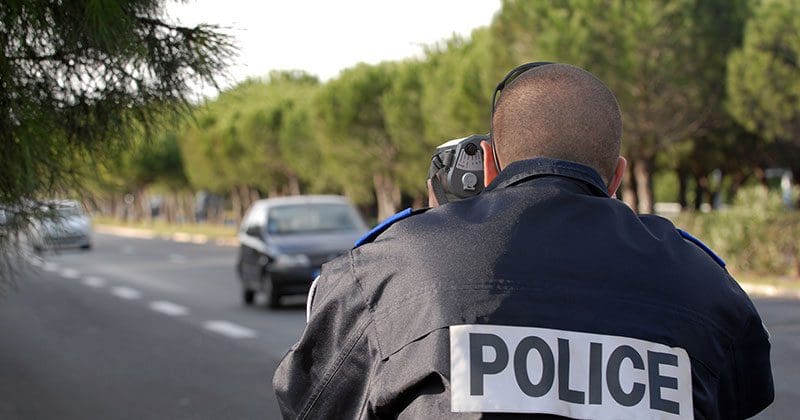
Police officers in North America have been using radar guns to catch speeders since 1949. This relatively simple technology evolved from military applications before World War II, where long-range installations were the size of a medium-size apartment building. Modern radar guns aren’t quite pocket-sized, but they are easily transportable and can be hand-held or installed permanently in a police vehicle. Let’s look at how a radar gun works.

How Does Speed-Detecting Radar Work?

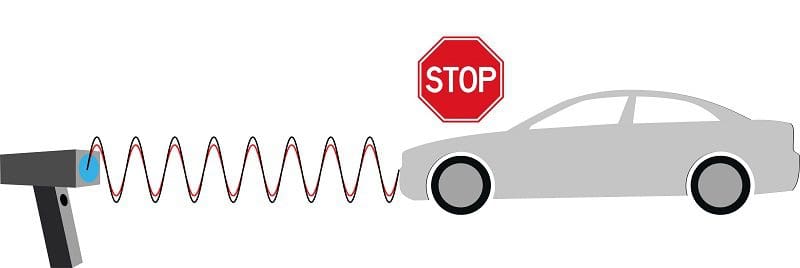
In simple terms, a radar gun transmits a narrow beam of radio-frequency energy out the front of the gun and looks for that signal to be reflected back to the gun after bouncing off an object. Unlike lidar and laser guns, the speed measurement is calculated by how much the received signal has changed in frequency after reflecting off the moving object. This phenomenon is called a Doppler effect and is the same reason that a car sounds different as it approaches and drives away from you.

Police Radar
Radio frequency signals bouncing off a stationary object are reflected to the source at the same frequency.

Please Explain Doppler Effect to Me!

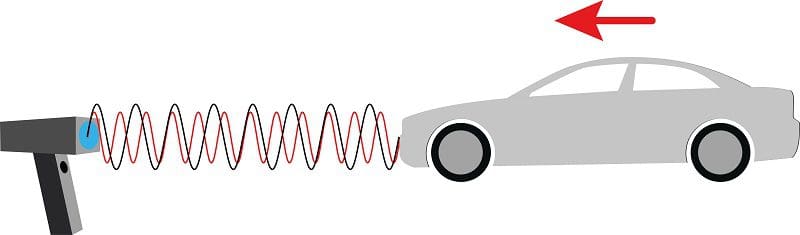
Imagine that you have a tennis ball machine shooting balls at a stationary object once every second. The balls bounce back to the machine and arrive once per second. If you start to move the object toward the ball launching machine, the balls bounce back faster and faster as the object approaches the machine. This increase in return speed represents an increase in frequency.

Police Radar
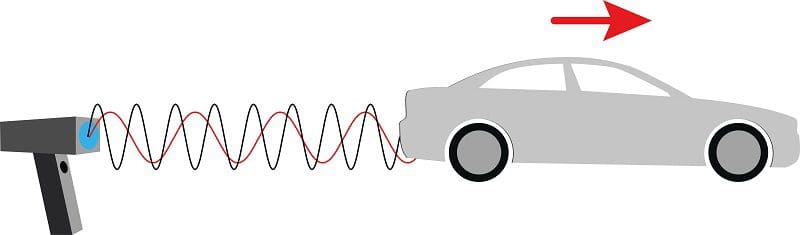
Radio frequencies that bounce off of an object moving away from the radar gun are reflected at a lower frequency.

If an object is moving away from the tennis ball machine, it will take longer for each ball to bounce back, thus representing a decrease in frequency. The digital signal processor in modern radar guns is configured to analyze the changes in the reflected signal very quickly and display a speed reading in less than a second.

Police Radar
Radio frequencies that bounce off of an object moving toward the radar gun are reflected at a higher frequency.

Different Radar Bands

Police RadarIn North America, police officers use radar guns that operate in the X, K and Ka band frequency ranges. X band is the oldest technology and operates between 8 and 12 GHz; the K band is between 18 and 27 GHz; and the Ka band is between 27 and 40 GHz. X band radar is prone to interference from automatic door opening systems. K band (K is short for Kurz, which is the German word for short) and Ka (K-above band) radar are less resistant to atmospheric absorption than X band and less effective over long distances. Most of the new radar guns such as the Stalker II and the Kustom Talon use Ka band signals, so if your detector goes off, you know you need to react right away.

Radar Detectors Provide Early Warnings

Unlike lidar, the radar signal isn’t as precise at long distances, allowing it to spread well beyond the vehicle being measured. The high-sensitivity radar receiver in a radar detector is tuned to pick up extremely low-level signals and alert you that radar is in use. You need to act quickly when a radar detector goes off. Your local specialist mobile enhancement retailer can help you choose the perfect portable or custom-installed radar for your application and ensure that the system is installed cleanly. Drop by and find out what’s available today!

This article is written and produced by the team at www.BestCarAudio.com. Reproduction or use of any kind is prohibited without the express written permission of 1sixty8 media.
Filed Under: ARTICLES, PRODUCTS, Radar Detectors, RESOURCE LIBRARY

Product Spotlight: KICKER KEYLOC

KICKER KEYLOC

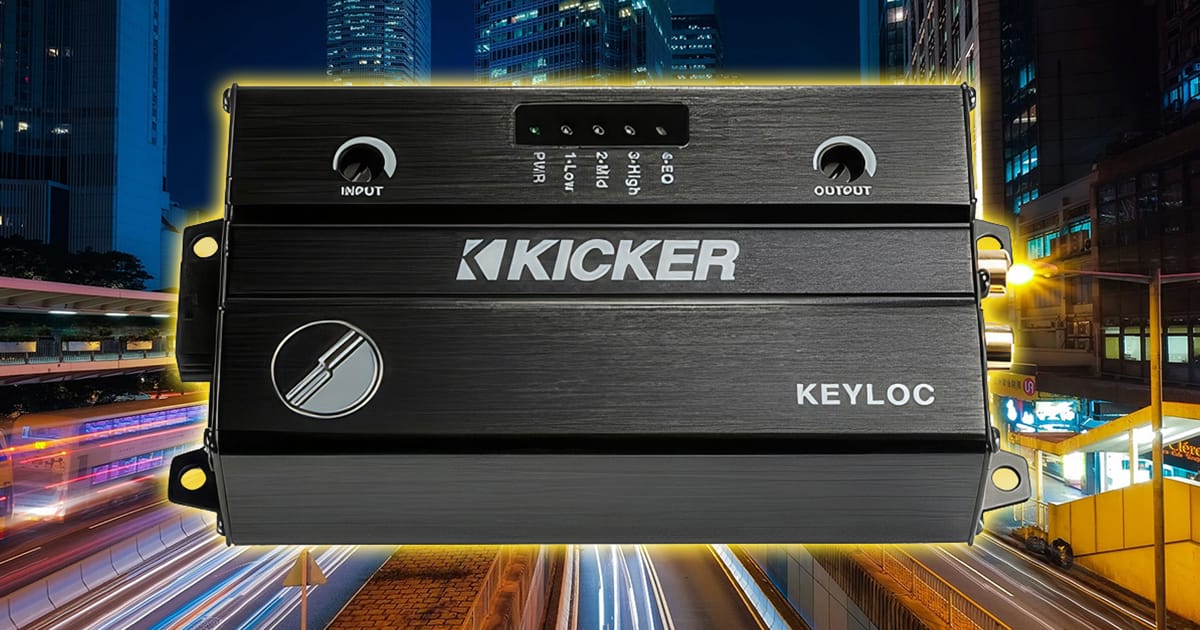
There are a dozen or so high-quality line output converters available to help your installer integrate an amplifier into a factory-installed audio system. That said, most of them are simple devices that do nothing more than adjust voltage gain and perhaps apply some equalization to the signal. KICKER’s KEYLOC is a unique solution because it features a built-in digital signal processor that undoes equalization, delays, and all-pass filters applied to the factory signal. The goal is to establish a clean signal that you can build on. Let’s check out the outstanding KICKER KEYLOC.

Basic Features of the KICKER KEYLOC

Let’s start with the basics. The KEYLOC is a two-channel line output converter that can accept up to 10 volts of signal in low-level mode and an impressive 40 volts in high-level mode. In low-level mode, the KEYLOC presents a 60-ohm load to the driving amplifier. Many factory-installed source units and amplifiers will go into protection mode without a proper load. External resistors are available from KICKER if needed for high-level operation. The maximum output of the KEYLOC is 10 volts.

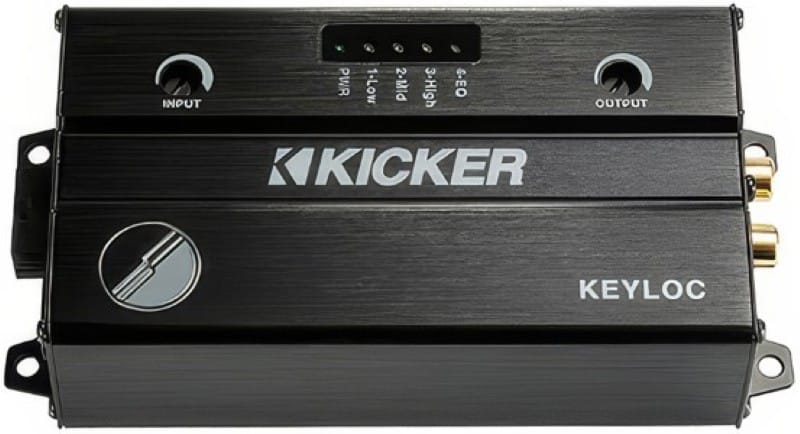
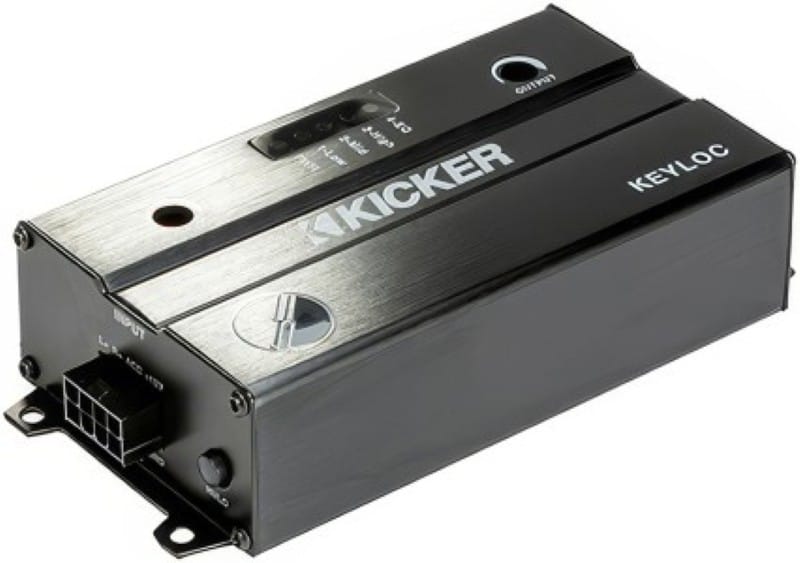
The KEYLOC measures 5.5 by 2.75 inches in footprint and is 1.375 inches thick. A Molex connector on the left side includes two speaker input channels, power and ground connections, and remote turn-on and remote output wiring. The remote output activates automatically when the KEYLOC detects a DC offset voltage on the input speaker wires, enabling an aftermarket amplifier to turn on. There are a pair of RCA output jacks on the right side of the chassis to feed your new amplifier.

The top panel of the KEYLOC features two stereo potentiometers and a display with five LEDs. The pots are for adjusting input sensitivity and output voltage. The LEDs indicate power and are part of the signal testing and KEY processing features of the KEYLOC.

KICKER KEYLOC
The LED display on the front panel of the KEYLOC provides your installer with information about frequency response and correction processing.

Audio Analysis Tool

Depending on the design of your factory audio system, it might be difficult to find a full-range signal. The Low, Mid, and High LEDs on top of the KEYLOC can be used with the provided pink-noise test track to determine whether you have a full-range signal. The Low indicator illuminates when there is sufficient audio information in the 20 Hz to 200 Hz range. The Mid indicator monitors 200 Hz to 2 kHz, and the High LED monitors audio above 2 kHz. If you are missing low- or high-frequency information, the KEY processing will not produce a full-bandwidth signal for your new equipment.

The KEY to Audio Excellence

The KEYLOC uses KICKER’s patent-pending KEY algorithm to analyze a special audio test signal. The signal includes sine sweeps, pink noise, and impulses, which reveal frequency response, signal delay, and all-pass filter processing. Once measured, the KEYLOC applies its own signal processing to eliminate these attributes from the audio signal. The result is a flat frequency response signal that will allow new speakers, amplifiers, and processors to sound amazing. The process is fully automated and takes between two and 10 minutes to complete. Your installer can even temporarily bypass the correction to demonstrate how much the system has improved thanks to the KEYLOC.

KICKER KEYLOC
The KEYLOC is small enough to hide behind the radio in your dash, yet powerful enough to correct even the most complex audio signals.

Why You Need the KICKER KEYLOC

Factory-installed audio systems are typically designed to extract the best possible performance from inexpensive speakers. As such, radios and amplifiers include signal processing such as equalization, delays, and all-pass filters to create an optimized listening experience. Don’t be fooled: this processing is present even in simple “radio-only” systems and isn’t exclusive to premium systems with complex multi-channel amplifiers.

The goal of upgrading a car audio system is, of course, to make it sound better. As such, you are likely to add subwoofers and new speakers to the vehicle. The equalization that worked with the factory speakers is not likely to be ideal for the higher-performance options you’ve chosen. Eliminating factory processing with a product like the KICKER KEYLOC is crucial to achieving great sound in your car, truck, or SUV. The KEYLOC is also great for motorcycles, side-by-sides, and marine applications.

Visit a KICKER Dealer Today

When it’s time to make your vehicle’s stereo sound better, drop by an authorized KICKER retailer to find out whether the KEYLOC is needed to undo the signal processing built into your factory-installed audio system. You can find an authorized KICKER retailer near you using the Dealer Locator on the KICKER website.

Be sure to follow Kicker on Facebook, Instagram and YouTube to keep up with the latest product releases from our friends in Stillwater.

This article is written and produced by the team at www.BestCarAudio.com. Reproduction or use of any kind is prohibited without the express written permission of 1sixty8 media.
Filed Under: ARTICLES, Car Audio, PRODUCTS, RESOURCE LIBRARY Tagged With: KICKER

How Does a Police Laser Gun Work?

Police Laser

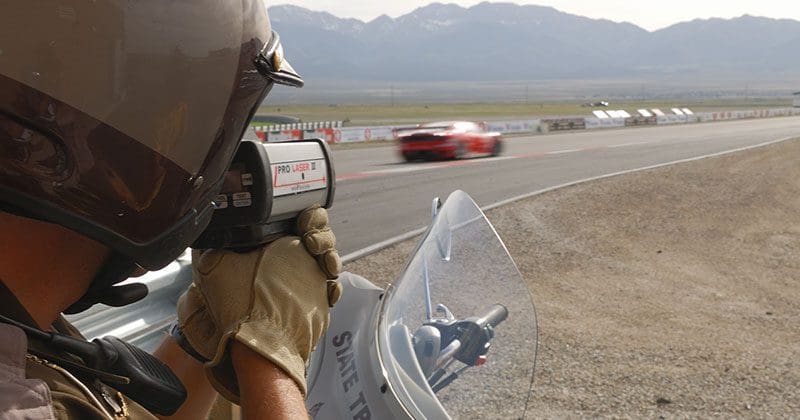
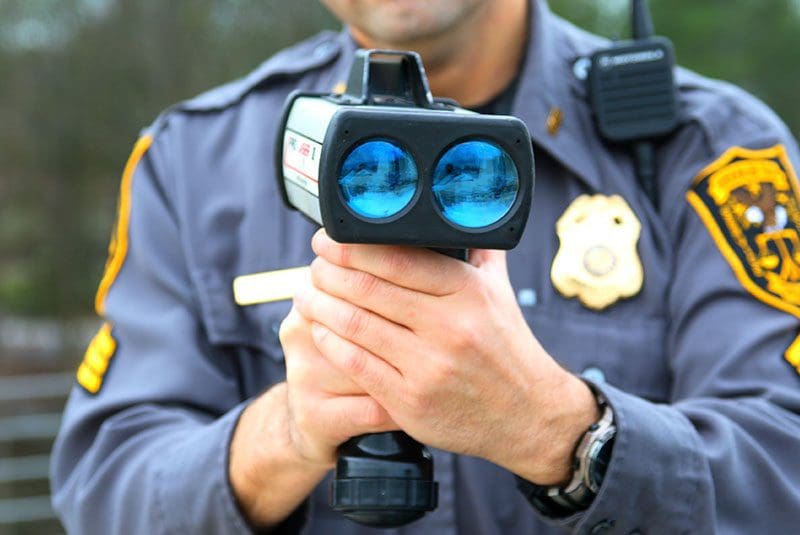
If you’ve ever driven past a speed trap or, worse, received a speeding ticket from a law enforcement officer using a laser gun, you may be curious about how these systems work. Also called a lidar gun, these speed measuring devices are not only very accurate, but they work quickly and reliably to let an officer know how fast you are traveling.

What Is Lidar?

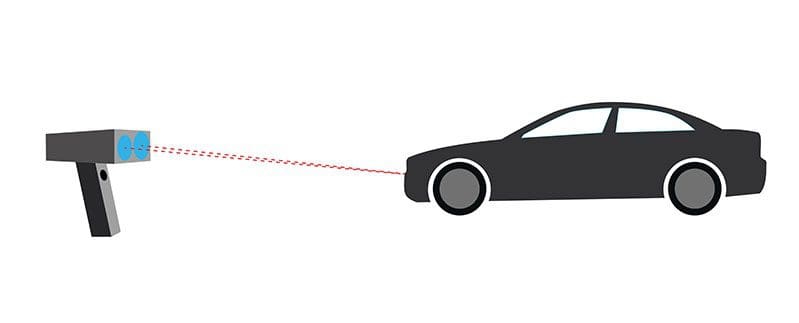
Police LaserInvented in early 1960s, lidar (which is short for Light Detection And Ranging) was designed to measure distances. Lidar devices transmit a series of infrared light pulses that are focused into a beam toward an object. The system measures how long it takes for that pulse to reflect back to the laser receiver (a second lens on the front of the device). Knowing that light travels at a speed of 186,000 miles per second, the computer in the device can calculate how far away an object is, based on how long it took each the pulse of light to return.

The first practical application for lidar was when the National Center for Atmospheric Research used it to measure clouds. In 1971, the crew on the Apollo 15 mission used a laser altimeter to create a map of the moon’s surface.

How Police Laser Works

Police LaserPolice laser guns use a series of pulses to calculate speed. If the operator points the gun at a stationary object, each pulse takes the same amount of time to reflect back to the gun. The system compares these reflection times and looks for a change. When there is no change, the unit will display an object speed of 0 mph.

If the time it takes for each pulse to return is decreasing, the gun knows the object is moving toward the operator. If the reflection time is increasing, then the object is moving away from the operator. The rate of change of signal reflection time is used to determine the speed at which the object is approaching (or moving away from) the operator.

While this sounds complicated, most lidar guns can perform these calculations extremely quickly, often in 0.3 to 0.35 seconds. This incredible speed makes it impossible for a driver to slow down before the officer knows how fast he or she is driving.

Police Laser
With light traveling at 11 feet 9 1/32 inches per nanosecond, police lidar guns use changes in reflection time to calculate how fast a vehicle is traveling.
Police Laser
As the car gets closer, the time it takes for the beam of light to reflect off of the vehicle and return to the gun decreases.

Police Lidar Accuracy

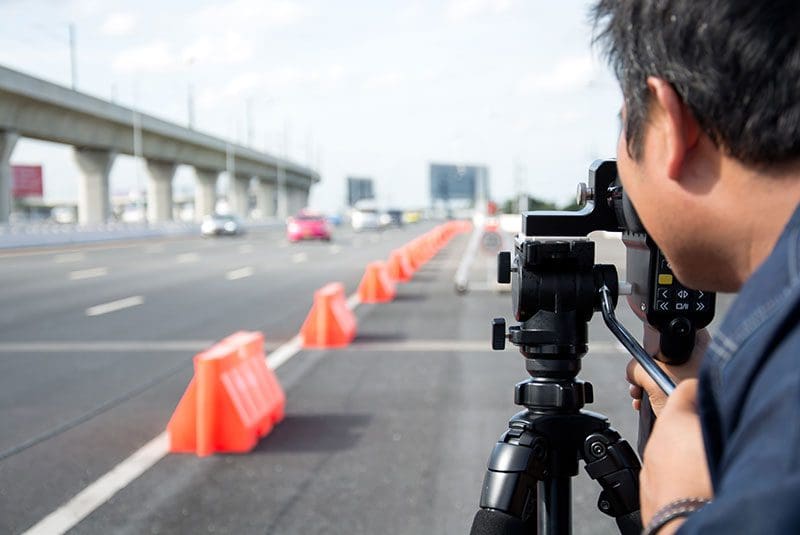
Police LaserAfter inspecting the specification sheets from companies like Stalker Radar, Kustom Signals and DragonEye Technology, most laser measurement systems are rated to provide a beam width of about 2.5 to 3 feet at a distance of 1,000 feet. This accuracy allows a police officer to select a single vehicle for measurement, even in dense traffic.

In terms of speed accuracy, all of the above manufacturers claim that the speed measurement is within 1 mile per hour. Though perhaps irrelevant for a discussion of policing, most laser (and radar) guns have a maximum measuring speed of about 180 to 200 miles per hour.

Why Is It Difficult to Jam Lidar?

Police LaserLaser or lidar jammers try to detect the pulses of light from the officer’s gun and determine the pattern being used. Once they detect the pattern, they transmit a similar series of laser pulses that are intended to confuse the gun and prevent an accurate reading. Laser jammer manufacturers are always working on software updates to support the newest anti-jamming technologies.

Protect Yourself with a Laser Jammer Today

If you are interested in learning about the technologies that are available for your car or truck to prevent officers from using laser guns to measure your speed, drop by your local specialist mobile enhancement retailer today. They can explain the solutions they carry and how they can install them on your vehicle. As always, we ask that you drive safely and obey all traffic laws on your next adventure or commute.

This article is written and produced by the team at www.BestCarAudio.com. Reproduction or use of any kind is prohibited without the express written permission of 1sixty8 media.
Filed Under: ARTICLES, Radar Detectors, RESOURCE LIBRARY

  • « Previous Page
  • 1
  • 2
  • 3
  • 4
  • 5
  • …
  • 40
  • Next Page »

Recent Articles

The passenger side seat of a vehicle with the kicker logo on an enclosure underneath it

Product Spotlight: KICKER L7T Truck Enclosures

May 25, 2026 

Adding a subwoofer system to a pickup truck is one of the best audio system upgrades you can make. The mobile audio specialists at KICKER have developed an entire series of … [Read More...]

A Custom Installed Radar

Custom-Installed Radar Detectors Deliver Better Protection

May 17, 2026 

When it comes to long-range sensitivity to police radar and a defense solution against lidar, a custom-installed radar detector is your best choice. Not only do custom-installed … [Read More...]

A dashcam installed in a vehicle on the front windshield

Understanding Advanced Dashcam Features

May 3, 2026 

By now you know that having a dashcam in your car or truck is the best way to protect your self against fraud and false accusations in the event of an accident. As with any type of … [Read More...]

A dashcam

The Importance of Professional Dashcam Installation

April 19, 2026 

When it comes to dashcams, getting the right dashcam and having professional installation are key to creating a system that functions reliably and remains safe. Dashcams come in a … [Read More...]

KICKER KMC5

Product Spotlight: KICKER KMC5

April 6, 2026 

Going back a few decades, only a handful of car audio manufacturers offered marine-specific source unit options. These were often car radios with oversized front panels with … [Read More...]

Subscribe!

Enter your email address to subscribe to our website and receive notifications of new posts by email.

Join 30 other subscribers

Customer Reviews

Subscribe to Our Website

Enter your email address to subscribe to our website and receive notifications of new posts by email.

Durham Location


Get directions to Auto Acoustics

Services

  • Car Audio
  • Driver Safety
  • Motorcycle Audio
  • Remote Starters
  • Truck Accessories
  • Window Tint

Hours

Monday, Tuesday, Wednesday, Thursday, Friday9:00 am – 6:00 pm

Connect With Us

  • Facebook
  • Instagram

Copyright © 2026 Auto Acoustics · Privacy Policy · Website by 1sixty8 media, inc. · Log in

Loading Comments...